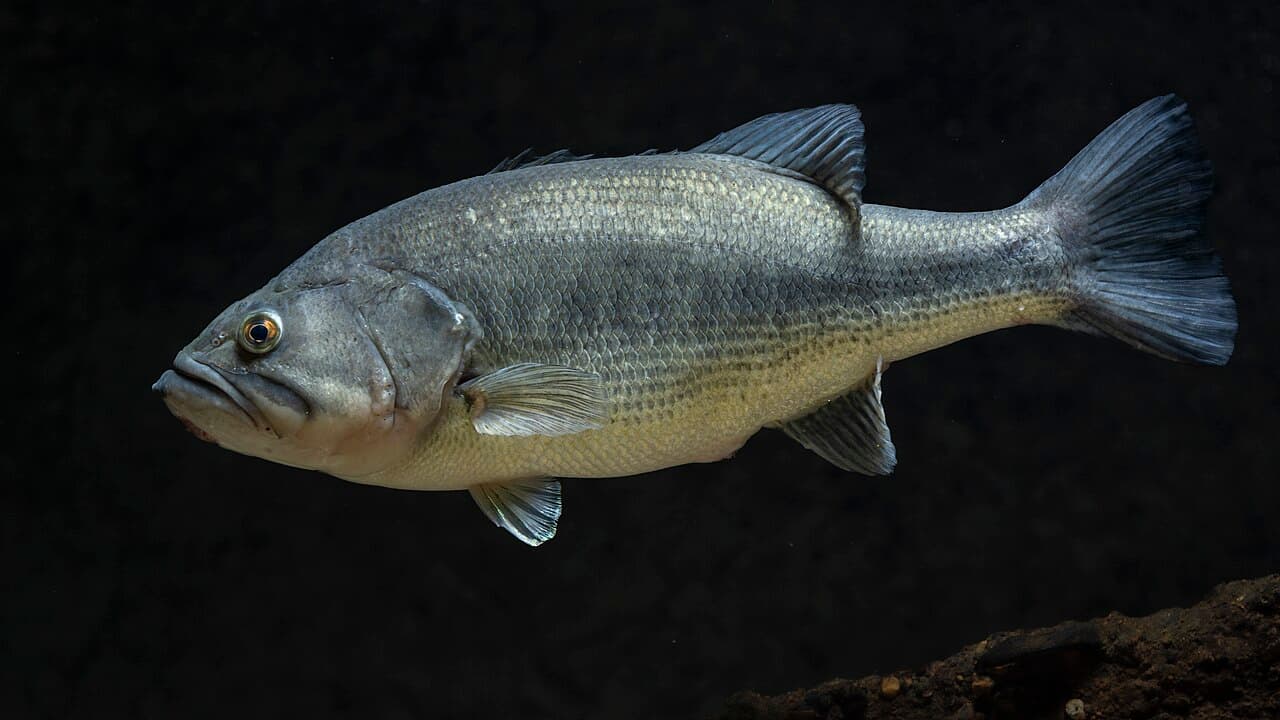
Micropterus salmoides
America's most popular gamefish. An ambush predator that holds tight to cover — grass, wood, docks — and eats almost anything that fits in its oversized mouth.
Find cover, put a natural-looking bait next to it, and be ready. Largemouth relate to structure almost all year, which makes them the best fish in America to learn pattern fishing on.
Guide data is editorial and general — conditions, regulations, and fish behavior vary by water. Photo: Wikipedia — Largemouth bass.
Use these field marks and context clues to separate largemouth bass from similar fish before logging or keeping one.
Compact, versatile gear you can cast and land fish with from a seated position.
A rig tuned for walking topwater plugs — explosive surface strikes for reds, trout, and bass.
A power finesse rig for Texas-rigged worms and creatures around cover.
Keep the boat off the cover line and make long casts; use the trolling motor, not the outboard, inside 100 yards.
Your stealth is an advantage — get tight to cover other anglers can't reach and skip baits under docks.
Fish parallel to the bank first — most pond bass sit within 10 ft of shore. Work the whole bank fan-casting before moving.
Warm, slow water with cover. Farm ponds, reservoir coves, natural lakes, backwaters of rivers, and canals all hold largemouth.
A largemouth's jaw extends past the back of the eye and it has a dark horizontal stripe; smallmouth are bronze with vertical bars and a shorter jaw.
Spotted bass have a rough tongue patch, rows of dark spots below the lateral line, and the jaw does not extend past the eye.
Size limits, bag limits, seasons, and gear rules change every year and differ by state (and often by individual water). Always verify with the official source before keeping fish.