Centropomus undecimalis
Florida's linesider — an ambush predator with a razor gill plate, a drag-scorching first run, and a PhD in structure. Snook fishing is precision casting to mangroves, docks, and beach troughs.
Fish structure on moving tide with your drag checked twice. Summer beach and pass fish are the accessible pattern; night dock lights and bridge shadow lines produce all year in South Florida.
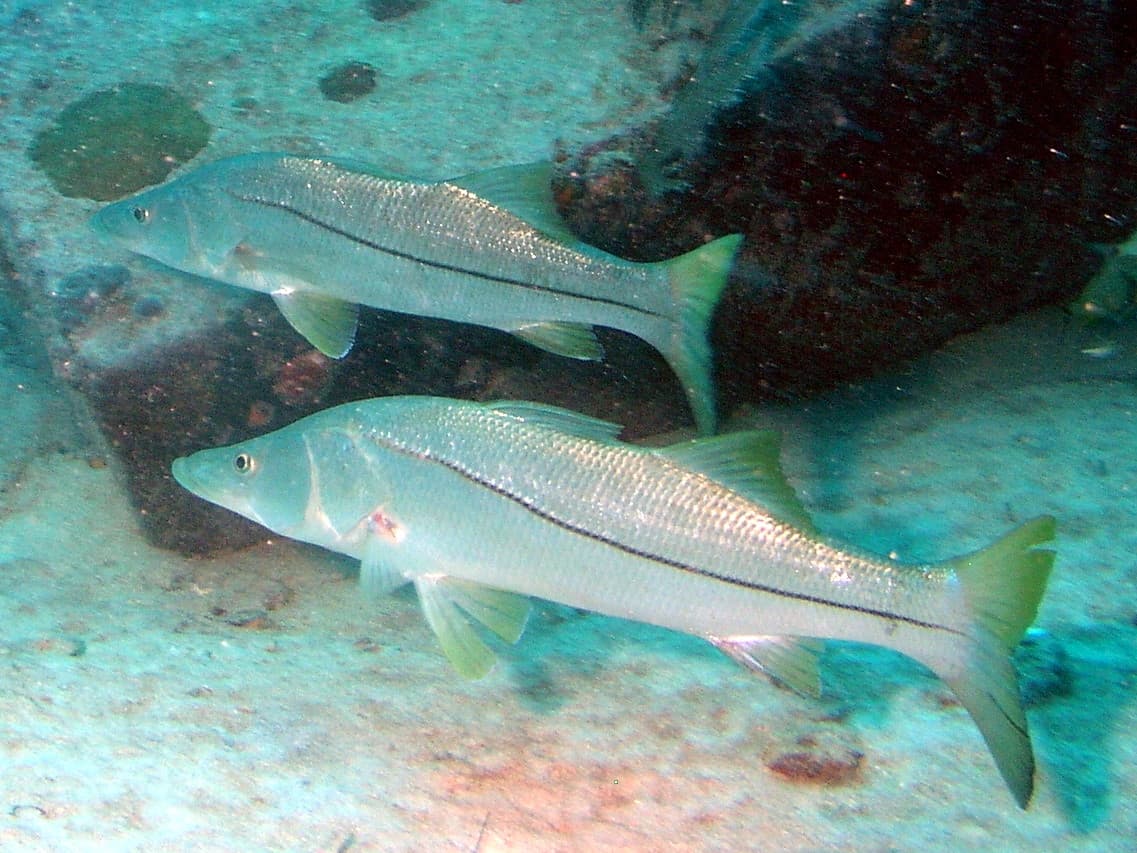
Guide data is editorial and general — conditions, regulations, and fish behavior vary by water. Photo: Wikipedia — Common snook.
Use these field marks and context clues to separate snook from similar fish before logging or keeping one.
One rig that covers redfish, trout, snook, and flounder across most inshore water.
Fishing structure from above, where fish hold in shade and current and dive for pilings.
Compact, versatile gear you can cast and land fish with from a seated position.
A do-it-all inshore boat rig for reds, trout, snook, and light nearshore fun.
Live-chum with pilchards at mangrove points; stake out passes on tide changes.
Night shadow lines; jig flair hawks up-tide.
Dawn patrol walking — polarized glasses, small white lures, casts parallel to the beach.
Backcountry creeks in winter; beach launches in summer.
Beaches, spillways, seawalls, and bridge catwalks make snook a genuine no-boat fishery.
Florida both coasts (roughly Tampa/Cape Canaveral south), plus South Texas — mangrove estuaries, beaches, and urban waterways.
Smaller relatives share the black lateral line; common snook get big and have the classic sloped profile.
Size limits, bag limits, seasons, and gear rules change every year and differ by state (and often by individual water). Always verify with the official source before keeping fish.