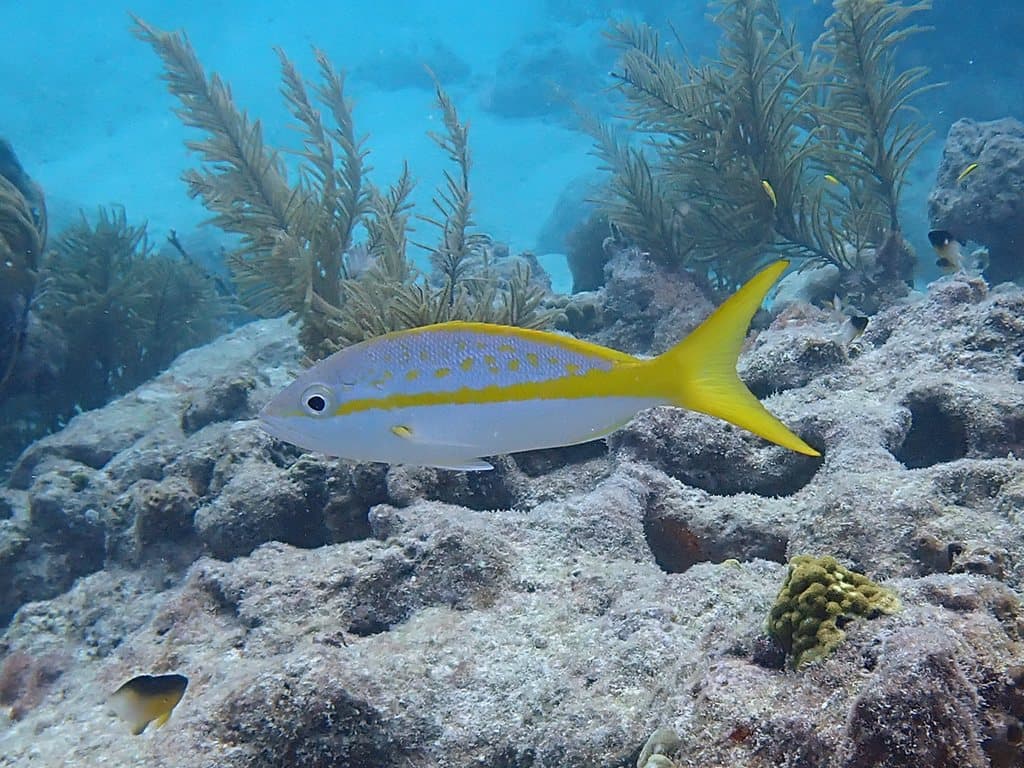
Yellowtail Snapper
Ocyurus chrysurus
A clear-water reef snapper with a bright yellow streamer tail and a suspicious eye for heavy line; classic Florida Keys chum-slick fishing.
Anchor up-current, start a steady chum line, and feed tiny baits back naturally until yellowtails rise and compete.
Quick Catch Plan
ID Characteristics
Use these field marks and context clues to separate yellowtail snapper from similar fish before logging or keeping one.
- Overall look: A clear-water reef snapper with a bright yellow streamer tail and a suspicious eye for heavy line; classic Florida Keys chum-slick fishing.
- Typical size: 1-3 lb; trophy class: 5 lb+.
- Most likely setting: reef, wreck, nearshore, offshore in Florida, Southeast, Atlantic Coast, Gulf Coast.
- Where to confirm it: Clean water, visible chum slick activity, and fish rising behind the boat.
- Compared with Lane snapper: Lane snapper have yellow side stripes and a dark shoulder spot; yellowtail have the long yellow midline and deeply forked yellow tail.
Gear Recommendations
- Rod
- 7' medium-light to medium spinning
- Reel
- 2500-4000 spinning
- Main line
- 10-15 lb braid or mono
- Leader
- 12-20 lb fluorocarbon
- Hooks
- #2-1/0 small live-bait hooks
- Jigheads
- 1/32-1/8 oz yellowtail jigs
- Terminal tackle
- Chum bag, oats/sand ball chum, minimal swivels
- Lure sizes
- Tiny chunks and 1-3" jigs
- Lure colors
- Pink, chartreuse, white, natural
- Baits
- Ballyhoo chunks · Silversides · Shrimp · Squid slivers
Simple start: 7' medium-light to medium spinning, 2500-4000 spinning, 12-20 lb fluorocarbon, and Tiny ballyhoo or silverside chunk drifted in a chum slick on 12-20 lb fluoro.. Fish the easiest public structure first and keep the bait natural.
One versatile spinning setup, a small hook box, fluorocarbon from 20 to 40 lb, and fresh bait cover most yellowtail snapper trips.
Build a chum-and-flatline program: anchor up-current, start light, feed unweighted baits naturally, and adjust leader size until the larger fish commit.
Techniques
- Presentation
- Let baits drift back at the same speed as the chum; any drag or hardware looks wrong.
- Retrieve
- Open bail/feed line until the bite, then close and wind tight.
- Positioning
- Anchor so the chum line crosses the reef edge without putting the boat over the fish.
- Depth
- 20-120 ft
- Structure
- Patch reefs, reef edges, wrecks, and current-swept hard bottom.
- Working current
- The slick is everything; no current means no presentation.
Classic chum-slick reef fishing.
Patch reefs in calm Keys conditions can be productive with compact chum and light tackle.
Timing & Conditions
- Seasons
- Year-round in South Florida.
- Time of day
- Low light, night, and current changes.
- Weather
- Clean, manageable reef conditions.
- Wind
- Light to moderate for anchoring.
- Water temp
- Best 72-84°F.
- Tides
- Current is essential.
- Moon
- Night bites often improve around stronger moon tides.
- Pressure
- Pressured fish demand lighter leaders.
- Seasonal movement
- Reef-resident with local feeding shifts.
Habitat — Where to Find Them
Clear warm reefs and patch reefs where current sweeps food across hard bottom.
- Depth range
- 20-120 ft
- Look for
- Clean water, visible chum slick activity, and fish rising behind the boat.
- Migration
- Resident on reef systems with local seasonal shifts.
Common Mistakes
- Leader too heavy
- Bait drifting faster or slower than chum
- Inconsistent chum
- Anchoring directly over fish
- Oversized bait chunks
Catch, Handling & Release
- Landing
- Swing small fish; net larger flags.
- Handling
- Ice immediately; delicate table fish.
- Release
- Release quickly from shallow reefs; descend deeper fish when needed.
- Conservation
- Verify current state/federal reef-fish limits; Florida yellowtail rules differ by area and can change.
Common Lookalikes
Lane snapper have yellow side stripes and a dark shoulder spot; yellowtail have the long yellow midline and deeply forked yellow tail.
Local Regulations
Size limits, bag limits, seasons, and gear rules change every year and differ by state (and often by individual water). Always verify with the official source before keeping fish.
All state sources for this species
Guide data is editorial and general — conditions, regulations, and fish behavior vary by water. Photo: Wikipedia — Yellowtail snapper.
