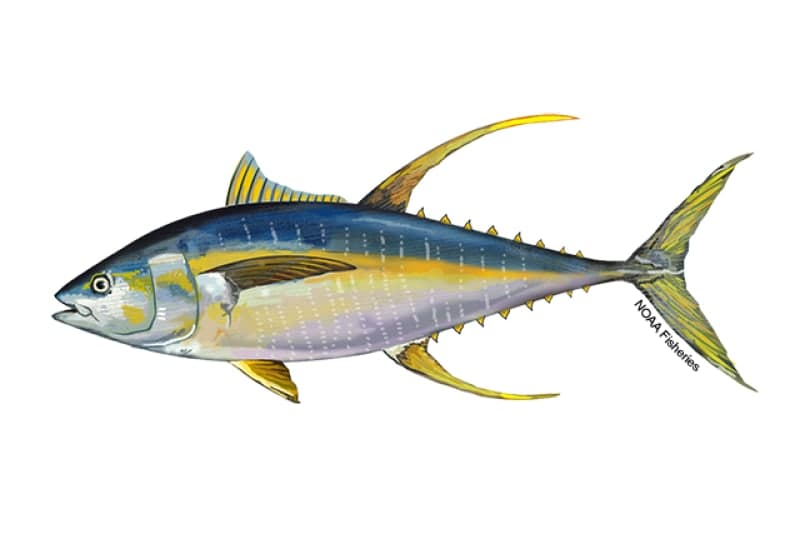
Thunnus albacares
The bluewater prize of the Gulf canyons and Northeast floaters — chrome-and-gold rockets with long yellow sickle finlets that test 50-wide tackle and the angler holding it. The tuna most US offshore crews chase.
Run to the break, the floaters, or the canyon. Troll a ballyhoo spread to find them, then live-chunk or pitch baits/poppers to the feeding school. In the Gulf, oil platforms in 1,000+ ft are the classic address.
Guide data is editorial and general — conditions, regulations, and fish behavior vary by water. Photo: NOAA Fisheries.
Use these field marks and context clues to separate yellowfin tuna from similar fish before logging or keeping one.
Heavy gear for bottom fish and pelagics that pull hard and dive for structure.
Blue-water trolling rig for tuna and other fast pelagics.
Entirely a boat fishery — trolling, chunking, jigging, and casting to schools offshore.
Open bluewater over deep structure and thermal breaks — canyons, floaters, and seamounts far offshore.
Bigeye have a noticeably larger eye, shorter finlets, and lack the long second-dorsal/anal lobes big yellowfin grow; bigeye body is rounder and deeper.
Blackfin stay small with dusky finlets; yellowfin have bright-yellow finlets edged in black and grow far larger.
Size limits, bag limits, seasons, and gear rules change every year and differ by state (and often by individual water). Always verify with the official source before keeping fish.