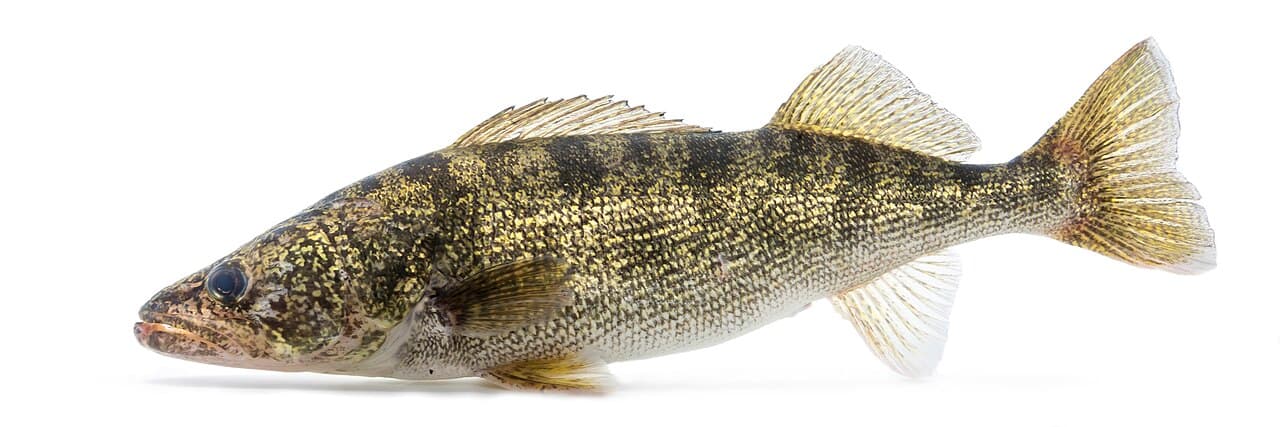
Walleye
Sander vitreus
The Midwest's obsession and the best-eating fish in freshwater. Marble-eyed light haters that feed at dusk, dawn, and depth — precision presentations beat power fishing.
A jig and a minnow on the bottom at the right depth at the right hour. Walleye are structure-and-schedule fish: find the breakline, fish the low-light windows, and stay in touch with bottom.
Quick Catch Plan
ID Characteristics
Use these field marks and context clues to separate walleye from similar fish before logging or keeping one.
- Overall look: The Midwest's obsession and the best-eating fish in freshwater. Marble-eyed light haters that feed at dusk, dawn, and depth — precision presentations beat power fishing.
- Typical size: 1–4 lb (15–22 in); trophy class: 28 in+ / 8 lb+.
- Most likely setting: lake, river in Midwest, Northeast, West.
- Where to confirm it: The sharpest depth transition near the main basin with bait on it.
- Compared with Sauger: Sauger have spotted dorsal fins and blotchy sides; walleye have a white tail tip and a dark blotch at the rear of the first dorsal.
- Compared with Yellow perch: Perch are smaller with bold vertical bars and no canine teeth.
Gear Recommendations
- Rod
- 6'8"–7'2" ML-M extra-fast spinning ('jig stick')
- Reel
- 2500 spinning
- Main line
- 8–10 lb braid
- Leader
- 8 lb fluorocarbon, 4 ft
- Hooks
- #4–#2 octopus for rigs; #2 harness hooks
- Jigheads
- 1/8–3/8 oz round and stand-up heads
- Terminal tackle
- Lindy/slip-sinker rigs, bottom bouncers 1–2 oz, slip floats for leeches
- Lure sizes
- #5–#7 crankbaits, 1/4–3/4 oz blades
- Lure colors
- Gold, perch, firetiger stained water; purple/white clear water; glow at night
- Baits
- Fathead minnows · Nightcrawlers (summer harnesses) · Leeches (the summer secret) · Shiners in fall
ML spinning combo, 8 lb line, 1/4 oz jig + minnow — drag it slowly along the deep edge of a point at sunset.
Add a slip-float kit for leeches and two crankbaits for trolling/casting at dusk.
Boat with sonar/GPS, bottom bouncer + harness spread for summer, lead core or snap-weights for trolling breaks, jig rods for river runs.
Techniques
- Presentation
- Vertical or near-vertical jigging with constant bottom contact; drag-pause more than hop in cold water.
- Retrieve
- Slow. Lift-drop 6 inches; bites feel like weight or a single 'tick' — set fast.
- Positioning
- Boat directly over the breakline, moving 0.2–0.5 mph with the wind or trolling motor.
- Depth
- River: 8–20 ft seams. Lakes: 12–30 ft structure, shallower at night and in waves.
- Structure
- Points, humps, breaklines, rock-sand transitions, weed edges in summer, dam faces.
- Working current
- Walleye stack in seams and eddies — jig the slack side of the current line.
The default: precise depth control with electronics turns walleye from hard to routine.
Slow-troll harnesses along breaks with a drift sock.
Underrated at night — cast crankbaits over shallow rock at dusk in spring/fall, and fish dam tailraces.
Timing & Conditions
- Seasons
- Spring spawn runs, June leech/crawler bite, fall trophy night bite, and ice season — walleye never fully close.
- Time of day
- Dusk is the headline; dawn and full dark follow. Midday needs depth, wind, or stain.
- Weather
- The 'walleye chop' — 10–15 mph wind — turns a dead lake on. Flat sun is tough.
- Wind
- Fish the windblown structure; the wave-churned side always outproduces the calm side.
- Water temp
- Active 40–75°F; peak feeding 55–68°F.
- Moon
- Full-moon nights produce giants shallow in fall.
- Pressure
- Stable-to-falling; post-front bluebird = downsize and slow down.
- Seasonal movement
- Spawning runs to rivers/rock reefs at ice-out; deep summer structure; shallow fall night prowls; deep basin winter.
Habitat — Where to Find Them
Natural lakes and big rivers of the Midwest and Great Plains, Great Lakes, plus stocked reservoirs east and west.
- Depth range
- 6–35 ft by light and season.
- Look for
- The sharpest depth transition near the main basin with bait on it.
- Migration
- Predictable annual circuits: spawn (rivers/reefs) → summer structure → fall shallows → winter basins.
Common Mistakes
- Fishing fast — walleye want it slow and precise
- Losing bottom contact and fishing 3 ft over their heads
- Ignoring the wind-blown bank because it's uncomfortable
- Quitting at sunset right when the bite starts
- Line too heavy killing jig feel; too little attention to 'tick' bites
Catch, Handling & Release
- Landing
- Net — walleye roll and throw jigs at the surface. Watch the gill plates and teeth.
- Handling
- Grip across the back behind the head; avoid the spiny dorsal and razor gill covers.
- Release
- Fish from deep water may need slow retrieval; big females (24"+) are the future — many anglers release all over 20".
- Conservation
- Slot limits are common (e.g., 17–26" protected) and vary by lake — check the exact water.
Common Lookalikes
Sauger have spotted dorsal fins and blotchy sides; walleye have a white tail tip and a dark blotch at the rear of the first dorsal.
Perch are smaller with bold vertical bars and no canine teeth.
Local Regulations
Size limits, bag limits, seasons, and gear rules change every year and differ by state (and often by individual water). Always verify with the official source before keeping fish.

All state sources for this species
Guide data is editorial and general — conditions, regulations, and fish behavior vary by water. Photo: Wikipedia — Walleye.
