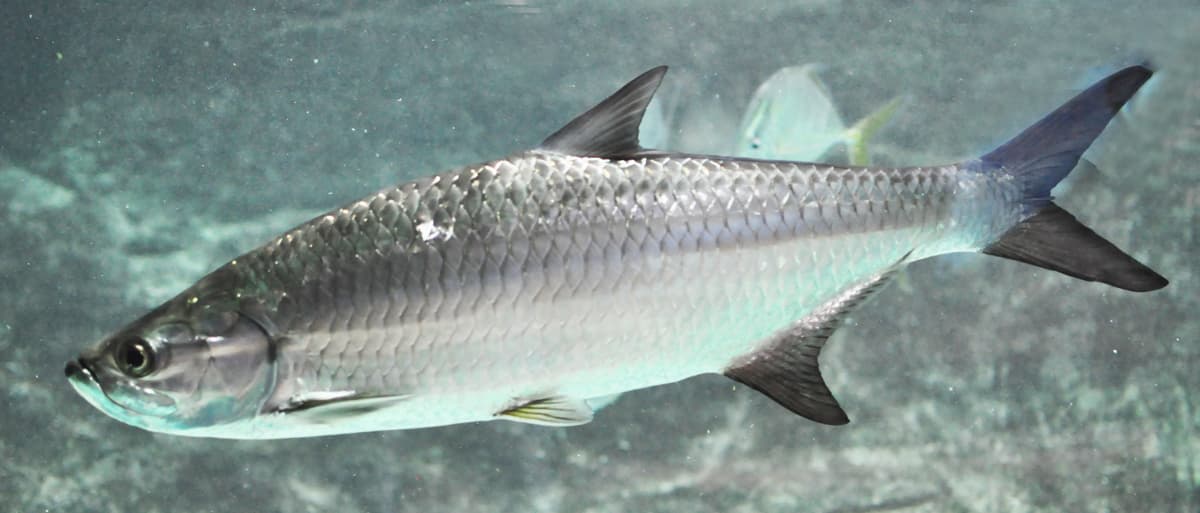
Tarpon
SaltwaterIn season now

Tarpon

Megalops atlanticus

The Silver King — a 100-million-year-old, 100-pound acrobat that eats flies and crabs, jumps like nothing else alive, and breaks hearts as its defining move. The pinnacle of inshore fishing.

Typical size
40–100 lb (plus juveniles 5–30 lb in backwaters)
Trophy class
150 lb+
Expert

Season, tide, and presentation discipline. Migrating spring fish eat crabs drifted down current lanes; resident juveniles in backwaters teach you the eat. Bow to every jump or lose the fish.

Quick Catch Plan

Best bait right now
Live pass crab drifted with the tide to rolling fish, 5/0 circle hook
Recommended lure
Soft swimbaits, large profile plugs at night, black/purple flies at dawn
Setup
8' heavy spinning, 8000 reel, 65 lb braid to 60–80 lb fluoro
Where to go
Passes and beaches (migration), rivers/canals (juveniles), bridges at night
Best time
Dawn, dusk, and the hill tides (strong new/full moon tides) of May–July
Season notes
The famous migration runs April–July, peaking around Boca Grande/Keys in May–June; juveniles bite all year in backcountry.

ID Characteristics

Use these field marks and context clues to separate tarpon from similar fish before logging or keeping one.

  • Overall look: The Silver King — a 100-million-year-old, 100-pound acrobat that eats flies and crabs, jumps like nothing else alive, and breaks hearts as its defining move. The pinnacle of inshore fishing.
  • Typical size: 40–100 lb (plus juveniles 5–30 lb in backwaters); trophy class: 150 lb+.
  • Most likely setting: inshore, beach, flats, bridge, canal in Florida, Gulf Coast, Southeast.
  • Where to confirm it: Rolling — tarpon gulp air. Scan calm water at first light for the flash of silver.
  • Compared with Ladyfish: Ladyfish look like 2 lb miniature tarpon; a real juvenile tarpon has the huge upturned mouth and last dorsal ray filament.

Gear Recommendations

Rod
7'6"–8' H spinning (juveniles: 7' M)
Reel
6000–10000 with 30+ lb drag
Main line
50–80 lb braid
Leader
60–80 lb fluorocarbon, 4–6 ft
Hooks
4/0–7/0 strong circle hooks
Jigheads
n/a mostly; weighted swimbait hooks
Terminal tackle
Float rigs for crab drifts
Lure sizes
5–8" baits
Lure colors
Black/purple (low light), natural mullet, white
Baits
Pass crabs (the migration bait) · Live mullet · Live pilchards/threadfins · Big dead mullet on bottom (night, giants)
Beginner setup

Start on juveniles: 7' M spinning, 30 lb leader, small swimbaits in backcountry creeks — learn the jump-bow reflex on 10 lb fish.

Budget setup

One 8' H combo and a dozen crabs fished at a pass on the hill tide.

Serious angler

Guided skiff season during migration; 11–12 wt fly setups; night bridge program with oversized plugs.

Techniques

Presentation
Drift baits at the fish's depth ahead of rolling schools — tarpon rarely chase down-current. Fly/lure: cross their path, moving away.
Retrieve
Slow and steady; speed up only if they're on it. Set with 2–3 hard side sweeps, never up.
Positioning
Set up up-tide of the swim lane; never run motors over rolling fish (one boat ruins it for everyone).
Depth
Rolling fish are within 10 ft of surface; pass fish eat crabs 5–15 ft down.
Structure
Passes, beach troughs, bridge shadow lines, river mouths, backcountry lakes.
Working current
Tide lanes ARE the spot — crabs and shrimp flush on hill tides and tarpon queue up.
boat fishing

Drift the passes with crabs; stake out beach lanes at dawn.

pier fishing

Gulf piers hook giants on live mullet each summer (landing them is another matter).

kayak fishing

Legitimately great at river mouths and beaches — getting towed is part of it.

shore fishing

Night bridges and spillways produce real shots from land.

Timing & Conditions

Seasons
April–July migration is the show; October mullet run reprise; juveniles year-round in warm backwaters.
Time of day
Dawn is sacred; night bridges for giants; they roll all day when it's calm.
Weather
Calm, muggy mornings; tarpon hate cold — below 70°F they get lockjaw.
Wind
Glass calm = happy rolling fish; chop scatters and sinks them.
Water temp
75–88°F is the window.
Tides
Hill tides (biggest monthly tides) around new/full moons trigger the crab flush — circle those dates.
Moon
See above — the moon runs this fishery.
Pressure
Stable heat > everything; fronts end the bite for days.
Seasonal movement
Annual coastal migration FL Keys→panhandle/TX and up the Atlantic side; juveniles stay in backwaters for years.

Habitat — Where to Find Them

Florida is the world capital; the whole Gulf coast and Southeast Atlantic get summer runs. Juveniles live in mosquito ditches, golf ponds, and mangrove creeks.

Depth range
2–30 ft.
Look for
Rolling — tarpon gulp air. Scan calm water at first light for the flash of silver.
Migration
One of fishing's great migrations, tracked by anglers like a weather system.
passesbeach lanesbridgesriver mouthsbackcountry creeks

Common Mistakes

  • Not bowing to jumps — slack line during the leap is how you keep them buttoned... tight line throws the hook
  • Setting the hook upward like a bass angler
  • Under-tackle that turns a fight into hours (kills fish, ruins tides)
  • Running the boat through rolling schools
  • Fishing the wrong tide week — plan around hill tides

Catch, Handling & Release

Landing
Leader-touch = caught. Keep fish in the water — lifting big tarpon is illegal in FL (fish over 40" must stay in the water).
Handling
Boat-side photos only for adults; support juveniles horizontally briefly.
Release
Revive thoroughly moving water over gills — sharks patrol passes; release away from them when possible.
Conservation
FL: essentially catch-and-release only (one tag for records); keep them wet — it's the law and the ethic.

Common Lookalikes

Ladyfish

Ladyfish look like 2 lb miniature tarpon; a real juvenile tarpon has the huge upturned mouth and last dorsal ray filament.

Local Regulations

Size limits, bag limits, seasons, and gear rules change every year and differ by state (and often by individual water). Always verify with the official source before keeping fish.

All state sources for this species

Guide data is editorial and general — conditions, regulations, and fish behavior vary by water. Photo: Wikipedia — Atlantic tarpon.