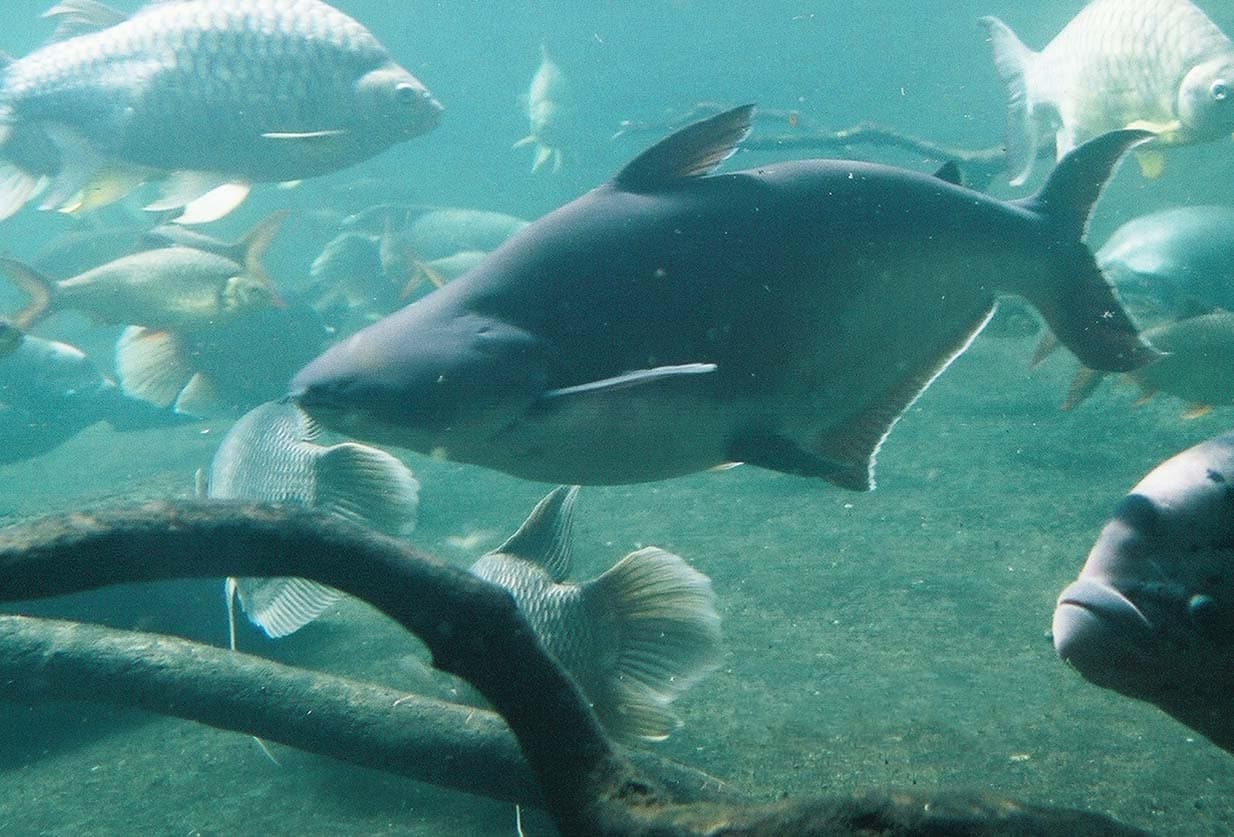
Pangasianodon hypophthalmus
The iridescent shark or patin — a sleek, hard-running pangasius found in rivers, reservoirs, and nearly every fishing pond in the region. Swai eat bread, pellets, and fruit baits, run like a train on light tackle, and are often the first proper fight a Southeast Asian angler ever hooks.
Swai cruise mid-water in schools, hoovering up bread, pellets, and anything drifting past. Feed a swim to pull the school in, float-fish or slow-sink a matching bait, and hold on — even a mid-sized swai runs hard enough to strip light tackle. They're abundant, obliging, and the perfect fish to learn on without being boring.
Guide data is editorial and general — conditions, regulations, and fish behavior vary by water. Photo: Wikipedia — Iridescent shark.
Use these field marks and context clues to separate swai catfish from similar fish before logging or keeping one.
Match a rig to Swai Catfish with the Setup Builder, or browse all setups.
On big rivers and reservoirs, anchor over holes and feed the school up to the boat.
Bank fishing with a fed swim is the standard, from city ponds to reservoir points.
One of the region's most widespread catfish — big rivers, reservoirs, canals, and nearly every stocked pond, always cruising mid-water in schools.
Giants dwarf swai and lack barbels as adults; swai keep two pairs of barbels and a slimmer, shark-like profile.
Swai show a silvery iridescent flank (bold stripes as juveniles) and a shark-like dorsal; local pangasius are separated mostly by range and head shape.
Size limits, bag limits, seasons, and gear rules change every year and differ by country and province (and often by individual water). Always verify with the official source before keeping fish.