Striped Bass
Morone saxatilis
A true two-world gamefish: the Atlantic coast's premier surf and boat target, and a landlocked freshwater giant in southern reservoirs. Stripers follow bait in schools and pull like freight trains.
Find the bait, find the stripers. Coastal fish migrate seasonally and feed in blitzes; landlocked fish herd shad on reservoir points and in tailraces. Both eat big baits moved with confidence.
Quick Catch Plan
ID Characteristics
Use these field marks and context clues to separate striped bass from similar fish before logging or keeping one.
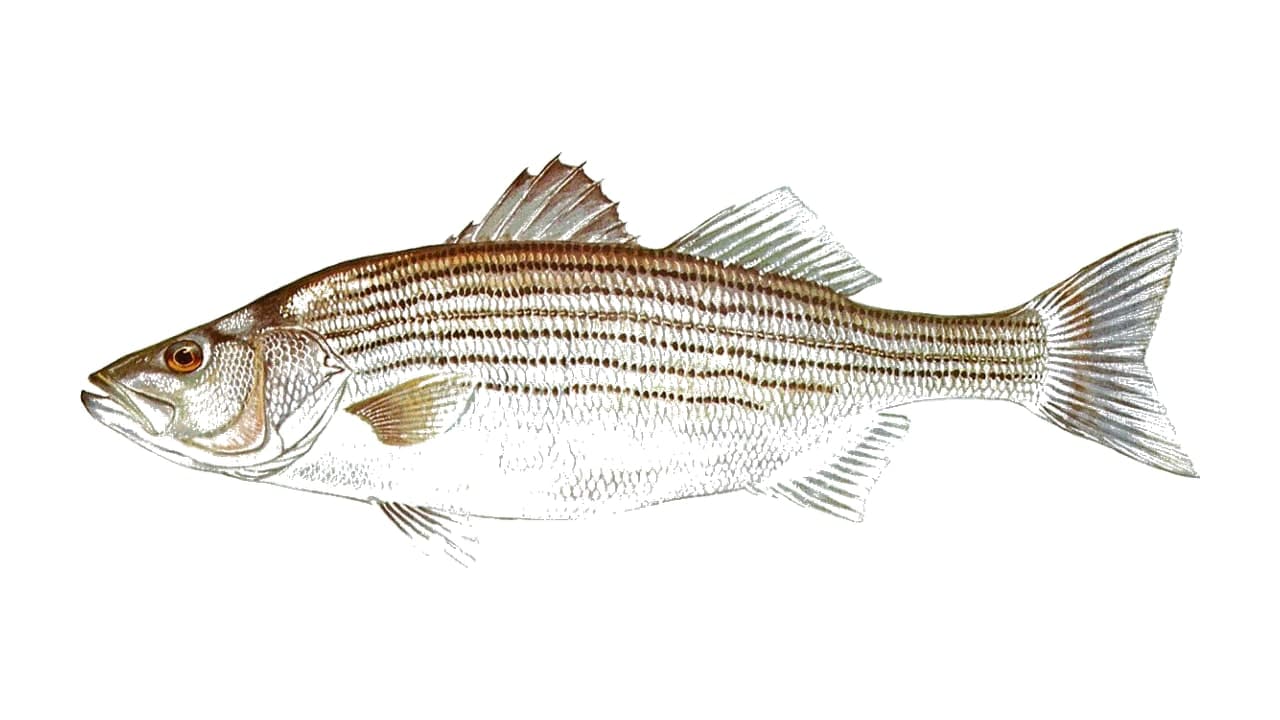
- Overall look: A true two-world gamefish: the Atlantic coast's premier surf and boat target, and a landlocked freshwater giant in southern reservoirs. Stripers follow bait in schools and pull like freight trains.
- Typical size: 5–15 lb (schoolies 20–28"); trophy class: 30 lb+ coastal; 20 lb+ landlocked.
- Most likely setting: surf, inshore, river, lake, jetty in Atlantic Coast, Northeast, Southeast, South Central, West.
- Where to confirm it: Birds, bait showers, and current lines. No bait, no stripers.
- Compared with Hybrid striped bass: Hybrids are deeper-bodied with broken, staggered stripes; pure stripers are sleeker with unbroken lines.
- Compared with White bass: White bass rarely top 3 lb and have one tooth patch on the tongue (stripers have two).
Gear Recommendations
- Rod
- 7'–10'6" by venue: 7' boat, 9–10'6" surf, 7' M reservoir
- Reel
- 4000–6000 spinning (8000 surf)
- Main line
- 20–40 lb braid
- Leader
- 20–40 lb fluoro/mono, 24–36"
- Hooks
- 2/0–7/0 circle hooks for bait; inline singles upgrade trebles
- Jigheads
- 1/2–2 oz bucktails and swimbait heads
- Terminal tackle
- Fish-finder rigs (surf bait), 3-way rigs (eels), heavy snaps
- Lure sizes
- 5–9" swimbaits, 6–7" pencil poppers, 1–3 oz bucktails
- Lure colors
- White, bone, chartreuse/white, blurple (night)
- Baits
- Live menhaden/bunker · Live eels (trophy bait at night) · Fresh cut bunker · Live gizzard/threadfin shad (lakes) · Bloodworms (schoolies)
7' MH spinning, 30 lb braid, one white paddletail and one pencil popper — fish dawn at an inlet or reservoir point.
Same rod plus a fish-finder rig kit and fresh cut bunker from the tackle shop.
Surf: dedicated 10'6" rod, plug bag, waders, moon/tide log. Boat: livewell for bunker/shad, downriggers or lead core for summer depth, sonar.
Techniques
- Presentation
- Match the bait size and get your lure into moving water. Under birds, cast beyond the school and retrieve through it.
- Retrieve
- Steady with rod-tip rhythm for swimbaits; long sweeping pops for pencils; slow-roll bucktails along bottom seams.
- Positioning
- Surf: fish the trough and bar cuts, not the horizon. Boat: up-current of rips, cast into the seam.
- Depth
- Surface to 40 ft; summer reservoir fish pin to the 68–72°F thermocline band.
- Structure
- Inlets, rips, boulder fields, bridge shadow lines, reservoir points, humps, tailraces.
- Working current
- Everything. Stripers feed where current does the work — tide rips, outflows, dam generation.
Live-line bunker over schools; jig rips; troll umbrella rigs when scattered (where legal).
Night shadow lines — jig bucktails along the light edge.
Structure at dawn with plugs; bait rods after dark. Move until you find life.
Deadly at inlets and reservoir points; leash everything and mind the current.
Bridges and riprap at night with jigs and eels.
Timing & Conditions
- Seasons
- Coast: spring and fall migrations. Reservoirs: fall through spring; summer at depth.
- Time of day
- Low light and night rule; overcast extends the day bite.
- Weather
- A nor'easter blowdown then clearing = epic fall surf. Stable summer patterns for lakes.
- Wind
- Onshore wind stacks bait on the beach — fish it, don't hide from it.
- Water temp
- 55–68°F prime coastal; landlocked stress above 78°F (handle fast or don't target).
- Tides
- Moving water only — the last 2 hours of outgoing at an inlet is a classic.
- Moon
- New/full moon big tides fire the eel bite at night.
- Pressure
- Pre-front feeding windows are real, especially fall.
- Seasonal movement
- Atlantic stock migrates NC→ME and back annually; reservoir fish follow shad basin-to-river seasonally.
Habitat — Where to Find Them
Atlantic coast surf/bays/rivers (native), plus landlocked populations in big reservoirs across the South and West.
- Depth range
- 2–50 ft by season and venue.
- Look for
- Birds, bait showers, and current lines. No bait, no stripers.
- Migration
- The classic coastal migrator; landlocked fish run rivers in spring (spawning behavior even where they can't reproduce).
Common Mistakes
- Fishing slack tide and dead water
- Lures too small during big-bait seasons (fall mullet/bunker runs)
- Skipping night tides — the biggest fish are nocturnal
- Fighting summer reservoir fish too long in warm water (delayed mortality)
- Ignoring the trough at your feet in the surf
Catch, Handling & Release
- Landing
- Lip grip small fish; net or beach big ones on a wave, not dragged dry.
- Handling
- Horizontal support for anything over 28"; keep out of dry sand.
- Release
- Coastal slot rules make careful release mandatory for big fish — no gaffs, single hooks help, revive facing current.
- Conservation
- Atlantic striper rules are strict and change yearly (slot limits, circle-hook mandates for bait) — check your state marine agency every season.
Common Lookalikes
Hybrids are deeper-bodied with broken, staggered stripes; pure stripers are sleeker with unbroken lines.
White bass rarely top 3 lb and have one tooth patch on the tongue (stripers have two).
Local Regulations
Size limits, bag limits, seasons, and gear rules change every year and differ by state (and often by individual water). Always verify with the official source before keeping fish.

All state sources for this species
Guide data is editorial and general — conditions, regulations, and fish behavior vary by water. Photo: Wikipedia — Striped bass.
