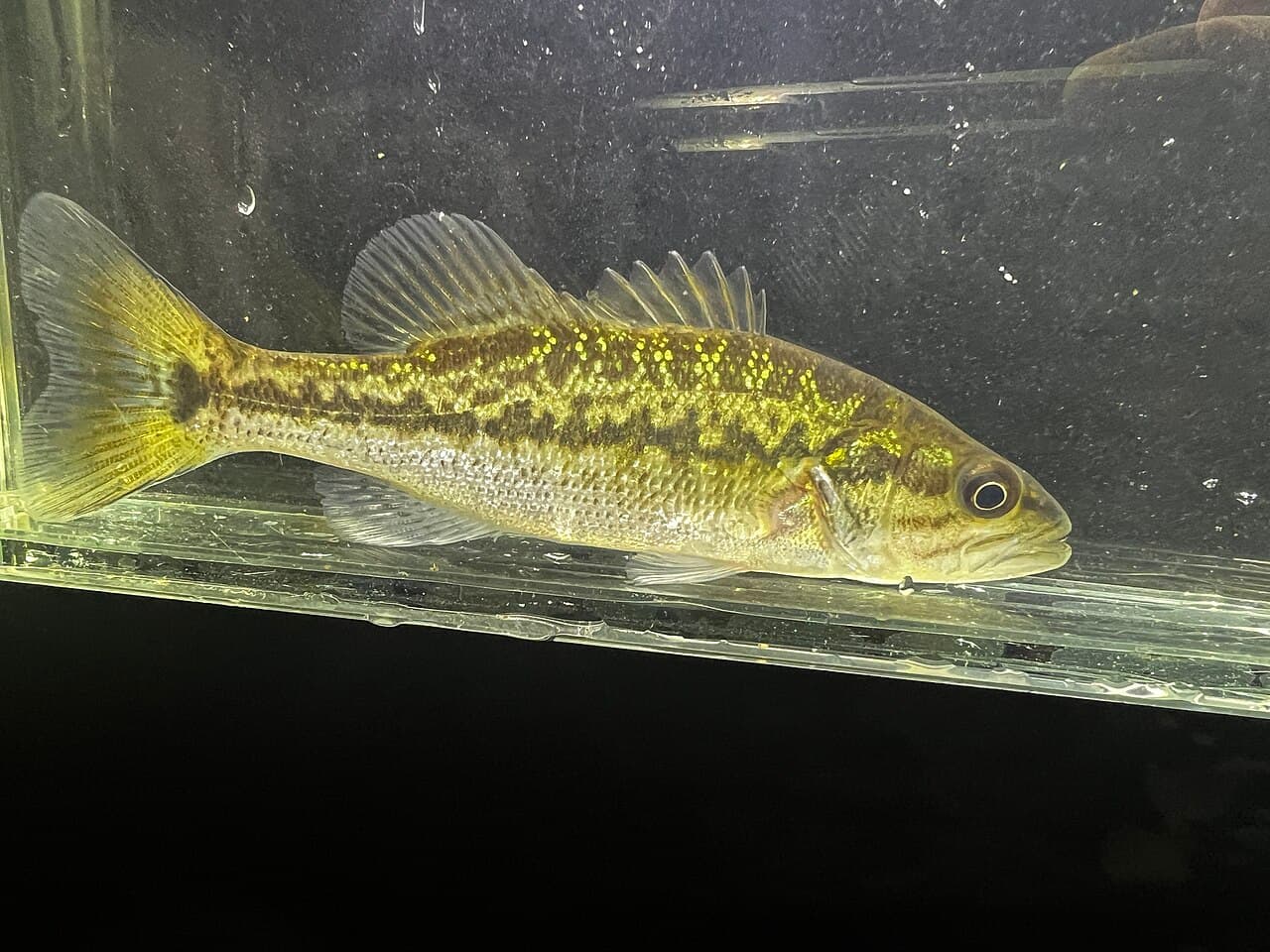
Spotted Bass
FreshwaterBeginner friendlyIn season now

Spotted Bass

Micropterus punctulatus

The open-water schooler of the bass family. Spots roam deep clear reservoirs chasing shad and blueback herring, and they schoool up like white bass when the bait balls up.

Typical size
1–3 lb
Trophy class
5 lb+ (8 lb+ Alabama bass in western reservoirs)
Moderate

Follow the bait. Spotted bass live around deep structure and suspended shad — electronics help, but points, bluffs, and schooling activity give them away from shore too.

Quick Catch Plan

Best bait right now
3.5" shaky-head worm on rocky points, or a small underspin around bait schools
Recommended lure
Shaky head, drop shot, underspin with a small swimbait, walking topwater when schooling
Setup
7' medium spinning, 2500 reel, 10 lb braid to 8 lb fluoro
Where to go
Main-lake rocky points, bluff walls, and deep brush in clear reservoirs
Best time
Early morning schooling bite; deep bite all day
Season notes
Fall/winter: follow shad into creeks and fish bait balls. Spring: pea-gravel pockets. Summer: 15–30 ft brush and timber.

ID Characteristics

Use these field marks and context clues to separate spotted bass from similar fish before logging or keeping one.

  • Overall look: The open-water schooler of the bass family. Spots roam deep clear reservoirs chasing shad and blueback herring, and they schoool up like white bass when the bait balls up.
  • Typical size: 1–3 lb; trophy class: 5 lb+ (8 lb+ Alabama bass in western reservoirs).
  • Most likely setting: lake, river in Southeast, South Central, West.
  • Where to confirm it: Bait on sonar or surface schooling activity — spots are rarely far from shad.
  • Compared with Largemouth bass: A spot's jaw stops at the eye, it has a rough tongue patch, and spots below the lateral line.
  • Compared with Smallmouth bass: Spots have a dark horizontal band; smallmouth show vertical bronze bars.

Gear Recommendations

Rod
6'10"–7'1" medium spinning, fast
Reel
2500–3000 spinning
Main line
10 lb braid
Leader
8 lb fluorocarbon
Hooks
1/0 finesse worm hooks, #1 drop shot
Jigheads
3/16 oz shaky heads, 1/4 oz underspins
Terminal tackle
3/8 oz drop shot weights, small barrel swivels
Lure sizes
3–4" finesse worms, 2.8–3.3" paddle-tail swimbaits
Lure colors
Green pumpkin, morning dawn, shad patterns (pearl, silver)
Baits
Live shad · Small shiners · Nightcrawlers
Beginner setup

Medium spinning combo, 8 lb line, shaky head + green pumpkin worm — drag it down rocky points.

Budget setup

One 7' M spinning setup covers shaky head, drop shot, and underspin duty.

Serious angler

Forward-facing sonar changes the game for suspended spots; dedicated drop shot and swimbait rods.

Techniques

Presentation
Drag bottom baits down sloping rock; count swimbaits down to suspended fish and retrieve steady.
Retrieve
Slow drag with shakes on bottom; medium-steady for underspins — don't over-work it.
Positioning
Boat over 25–40 ft casting shallow up the point; from shore, fan-cast the deepest bank access you can find.
Depth
10–30 ft most of the year; surface when schooling.
Structure
Main-lake points, bluffs, standing timber, brush piles, channel swings.
Working current
On river reservoirs, generation current turns the bite on around points and humps.
boat fishing

Idle points with sonar until you mark bait and arcs, then work three baits: topwater, underspin, drop shot.

kayak fishing

A fish finder on a kayak makes deep spots very catchable — anchor over brush.

shore fishing

Dams, riprap, and bridge ends give shore access to deep water spots love.

Timing & Conditions

Seasons
Good all year — spots feed through winter better than largemouth. Peak: fall shad chase and pre-spawn.
Time of day
First light for schooling fish; midday deep bite is steady.
Weather
Cloudy windy days pull fish shallower; calm sun sends them deep or suspends them.
Wind
Wind on a point = feeding spots on it.
Water temp
Active 48–80°F, ideal 55–70°F.
Pressure
Deep fish care less about fronts than shallow largemouth.
Seasonal movement
Track the shad: creeks in fall, main lake in summer, channel edges in winter.

Habitat — Where to Find Them

Clear, deep highland reservoirs and the rivers feeding them across the Southeast, plus introduced western lakes.

Depth range
5–35 ft; deeper than largemouth almost year-round.
Look for
Bait on sonar or surface schooling activity — spots are rarely far from shad.
Migration
Vertical and creek-to-main-lake seasonal shifts following forage.
rocky pointsbluff wallsbrush pilestimber edgeshumps

Common Mistakes

  • Fishing too shallow — start deeper than you think
  • Oversized lures; spots prefer 3" over 5"
  • Leaving schooling fish to 'run the pattern' — stay on breaking fish
  • Heavy leaders in gin-clear water
  • Ignoring winter — it's one of the best spot seasons

Catch, Handling & Release

Landing
Lip grip; watch the last-second surge near the boat.
Handling
Same care as any black bass: wet hands, support big fish.
Release
Fish caught from 25 ft+ may need a slow fight up; release quickly.
Conservation
Alabama bass are invasive in some states (they outcompete natives) — some agencies encourage harvest; check local rules.

Common Lookalikes

Largemouth bass

A spot's jaw stops at the eye, it has a rough tongue patch, and spots below the lateral line.

Smallmouth bass

Spots have a dark horizontal band; smallmouth show vertical bronze bars.

Guide data is editorial and general — conditions, regulations, and fish behavior vary by water. Photo: Wikipedia — Spotted bass.