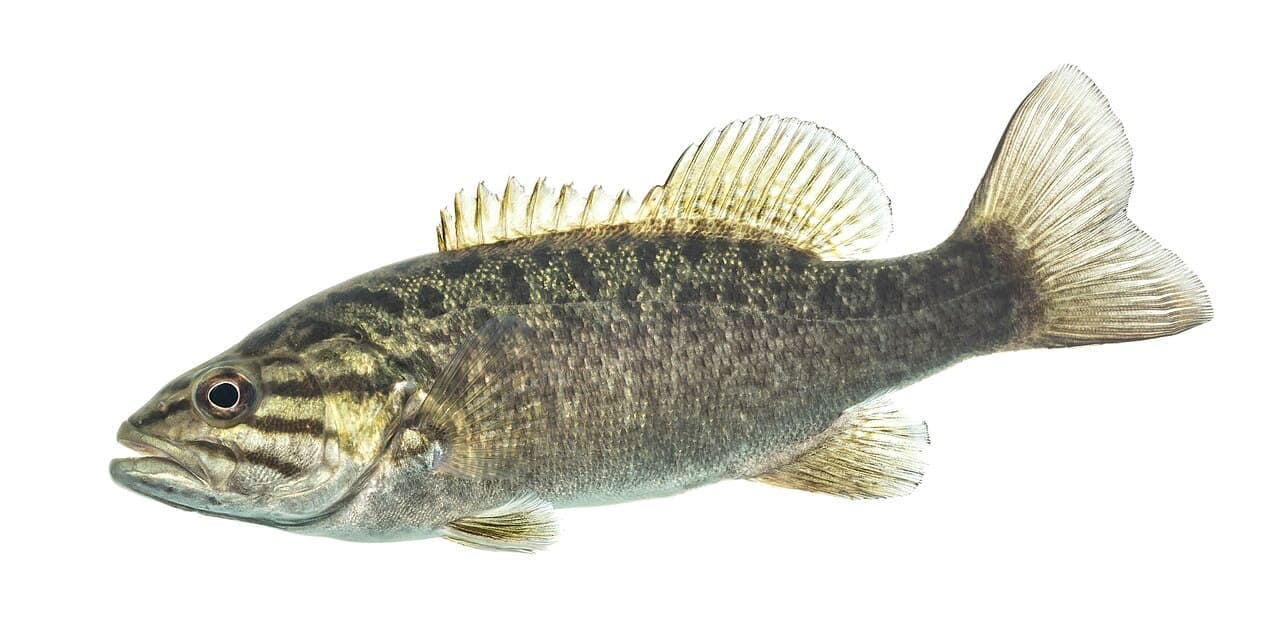
Smallmouth Bass
FreshwaterBeginner friendlyIn season now

Smallmouth Bass

Micropterus dolomieu

Pound for pound the hardest-fighting black bass. Loves rock, current, and cool clear water — a northern rivers-and-lakes specialist that jumps like a tarpon in miniature.

Typical size
1–3 lb
Trophy class
5 lb+ (6–7 lb in the Great Lakes)
Moderate

Think rock and current. Smallmouth eat crayfish and baitfish around hard bottom, and they respond to finesse presentations better than any bass.

Quick Catch Plan

Best bait right now
Ned rig (green pumpkin) dragged on rock, or a live crayfish/minnow
Recommended lure
Ned rig, tube jig, jerkbait, or walking topwater at first light
Setup
7' medium-light spinning rod, 2500 reel, 10 lb braid to 8 lb fluoro leader
Where to go
Rocky points, gravel flats, river current seams
Best time
Morning and evening; overcast mid-day is excellent too
Season notes
Spring: gravel spawning flats. Summer: deep rock and river riffles. Fall: heavy feeding on flats — the best smallmouth month is October.

ID Characteristics

Use these field marks and context clues to separate smallmouth bass from similar fish before logging or keeping one.

  • Overall look: Pound for pound the hardest-fighting black bass. Loves rock, current, and cool clear water — a northern rivers-and-lakes specialist that jumps like a tarpon in miniature.
  • Typical size: 1–3 lb; trophy class: 5 lb+ (6–7 lb in the Great Lakes).
  • Most likely setting: lake, river, creek in Northeast, Midwest, Southeast, West.
  • Where to confirm it: Hard bottom you can feel through the rod — sand and mud rarely hold smallmouth.
  • Compared with Largemouth bass: Smallmouth are bronze with vertical bars; the jaw does not extend past the eye.
  • Compared with Spotted bass: Spotted bass have a horizontal row of spots and a dark lateral band; smallmouth have vertical barring and red-tinted eyes.

Gear Recommendations

Rod
6'10"–7'2" medium-light to medium spinning, extra-fast tip
Reel
2500-size spinning
Main line
10 lb braid
Leader
6–10 lb fluorocarbon, 4–6 ft
Hooks
1–1/0 finesse hooks; #1 drop shot hooks
Jigheads
1/16–1/4 oz ned and tube heads
Terminal tackle
Drop shot weights 1/4–3/8 oz, split rings for jerkbaits
Lure sizes
2.75–4" plastics, 3.5–4.5" jerkbaits
Lure colors
Green pumpkin, brown/orange (crayfish), pearl and smelt patterns for baitfish
Baits
Live crayfish · Fathead minnows · Hellgrammites · Nightcrawlers
Beginner setup

6'6" medium spinning combo, 8 lb mono, pack of 3" tubes with 1/8 oz heads.

Budget setup

7' ML spinning (~$70), 10 lb braid + 8 lb fluoro, ned rigs, tubes, one jerkbait.

Serious angler

Dedicated drop shot rod, ned/tube rod, and a jerkbait/topwater rod; high-end 2500 reels, 8 lb fluoro leaders tied with an FG knot.

Techniques

Presentation
Drag and deadstick bottom baits — a ned rig standing still on a boulder gets bit. In rivers, cast upstream and drift baits naturally through seams.
Retrieve
Painfully slow on bottom; jerk-jerk-pause for jerkbaits with pauses up to 5+ seconds in cold water.
Positioning
In current, position downstream of the fish and cast up; in lakes, keep distance in clear water — long casts matter.
Depth
3–15 ft most of the season; 20–35 ft in mid-summer lakes.
Structure
Boulders, gravel bars, points, bluff ends, riffle-pool transitions, current seams.
Working current
Smallmouth face the current behind rocks — hit every eddy pocket and seam line.
boat fishing

Drift gravel flats with drop shots; use electronics to find isolated boulders on flats.

kayak fishing

Float rivers between accesses — you'll hit water nobody walks to.

shore fishing

Rivers are shore-angler gold: wade wet, fish every seam, and cover a mile of water.

Timing & Conditions

Seasons
Late spring and fall are peak. Summer river fishing stays strong. Deep and slow in winter.
Time of day
Topwater at dawn/dusk; finesse all day.
Weather
Light rain and clouds spike the river bite; clear cold fronts push lake fish deep.
Wind
Wind-blown rocky banks concentrate feeding fish in lakes.
Water temp
Active 50–75°F, ideal 60–70°F.
Pressure
Less pressure-sensitive in rivers than lakes; falling pressure still helps.
Seasonal movement
Lake fish slide deep in summer and winter; river fish shift to wintering holes below deep pools.

Habitat — Where to Find Them

Clear, cool, rocky water: northern natural lakes, highland reservoirs, and clean rivers from Maine to Minnesota to Tennessee.

Depth range
2–15 ft rivers; 5–35 ft lakes by season.
Look for
Hard bottom you can feel through the rod — sand and mud rarely hold smallmouth.
Migration
River fish can travel miles to wintering holes; lake fish move vertically more than horizontally.
bouldersgravel barsrocky pointsrifflesbluffsislands

Common Mistakes

  • Fishing largemouth-heavy tackle — downsize line and lures
  • Working bottom baits too fast; the pause gets the bite
  • Ignoring current seams and fishing the frog water
  • Skipping the shallows in fall when fish flood the flats
  • Overplaying jumps — bow the rod when a smallmouth clears water

Catch, Handling & Release

Landing
Lip grip or rubber net; they thrash at the boat.
Handling
Wet hands, support the belly, quick photo.
Release
River fish released in current recover fast; in warm summer water minimize the fight.
Conservation
Many northern states close or restrict the spring bass season to protect spawners — check dates.

Common Lookalikes

Largemouth bass

Smallmouth are bronze with vertical bars; the jaw does not extend past the eye.

Spotted bass

Spotted bass have a horizontal row of spots and a dark lateral band; smallmouth have vertical barring and red-tinted eyes.

Local Regulations

Size limits, bag limits, seasons, and gear rules change every year and differ by state (and often by individual water). Always verify with the official source before keeping fish.

All state sources for this species
ALAlabama Dept. of Conservation & Natural ResourcesAKAlaska Dept. of Fish & GameAZArizona Game & Fish Dept.ARArkansas Game & Fish CommissionCACalifornia Dept. of Fish & WildlifeCOColorado Parks & WildlifeCTConnecticut DEEPDEDelaware Div. of Fish & WildlifeFLFlorida Fish & Wildlife Conservation Commission (FWC)GAGeorgia Dept. of Natural ResourcesHIHawaii Div. of Aquatic ResourcesIDIdaho Fish & GameILIllinois Dept. of Natural ResourcesINIndiana Dept. of Natural ResourcesIAIowa Dept. of Natural ResourcesKSKansas Dept. of Wildlife & ParksKYKentucky Dept. of Fish & WildlifeLALouisiana Dept. of Wildlife & FisheriesMEMaine Dept. of Inland Fisheries & WildlifeMDMaryland Dept. of Natural ResourcesMAMassWildlife / Div. of Marine FisheriesMIMichigan Dept. of Natural ResourcesMNMinnesota Dept. of Natural ResourcesMSMississippi Dept. of Wildlife, Fisheries & ParksMOMissouri Dept. of ConservationMTMontana Fish, Wildlife & ParksNENebraska Game & ParksNVNevada Dept. of WildlifeNHNew Hampshire Fish & GameNJNew Jersey Div. of Fish & WildlifeNMNew Mexico Dept. of Game & FishNYNew York Dept. of Environmental ConservationNCNC Wildlife Resources Commission / Div. of Marine FisheriesNDNorth Dakota Game & FishOHOhio Dept. of Natural ResourcesOKOklahoma Dept. of Wildlife ConservationOROregon Dept. of Fish & WildlifePAPennsylvania Fish & Boat CommissionRIRhode Island DEMSCSouth Carolina Dept. of Natural ResourcesSDSouth Dakota Game, Fish & ParksTNTennessee Wildlife Resources AgencyTXTexas Parks & Wildlife Dept.UTUtah Div. of Wildlife ResourcesVTVermont Fish & WildlifeVAVirginia DWR / Marine Resources CommissionWAWashington Dept. of Fish & WildlifeWVWest Virginia Div. of Natural ResourcesWIWisconsin Dept. of Natural ResourcesWYWyoming Game & Fish Dept.

Guide data is editorial and general — conditions, regulations, and fish behavior vary by water. Photo: Wikipedia — Smallmouth bass.