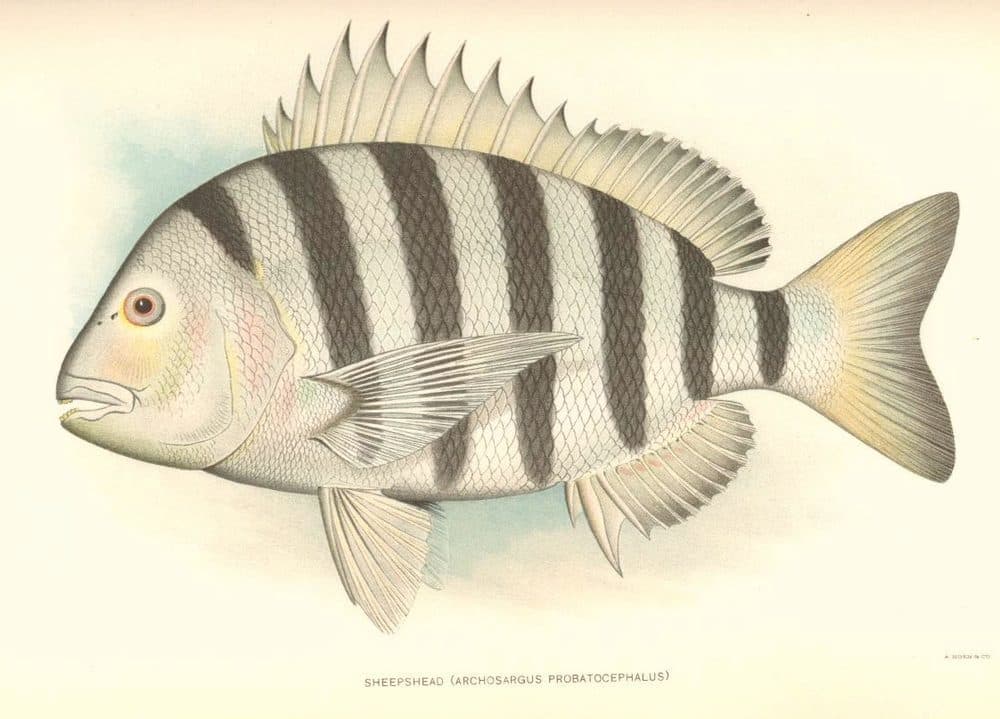
Sheepshead
SaltwaterBeginner friendly

Sheepshead

Archosargus probatocephalus

The convict fish — black-and-white bars, human-looking teeth, and a maddening talent for stealing bait off any hook. Structure-bound crustacean crushers that taste better than they fight (and they fight well).

Typical size
1–4 lb
Trophy class
8 lb+
Moderate

Drop a fiddler crab straight down next to barnacle-covered structure and learn to feel the 'nibble-nibble-gone.' Set on the second tick. Winter spawning aggregations are the trophy window.

Quick Catch Plan

Best bait right now
Fiddler crab on a #1 hook with a split shot, vertical against a piling
Recommended lure
Bait fishing almost exclusively (tiny crab jigs exist for the obsessed)
Setup
7' medium fast rod with sensitive tip, 3000 reel, 15 lb braid to 20 lb fluoro
Where to go
Bridge/dock pilings, jetties, oyster bars, nearshore reefs (winter)
Best time
Slack-ish tide edges when you can hold vertical, mid-day fine
Season notes
December–April spawning stacks big fish on nearshore reefs and channel structures — the season.

ID Characteristics

Use these field marks and context clues to separate sheepshead from similar fish before logging or keeping one.

  • Overall look: The convict fish — black-and-white bars, human-looking teeth, and a maddening talent for stealing bait off any hook. Structure-bound crustacean crushers that taste better than they fight (and they fight well).
  • Typical size: 1–4 lb; trophy class: 8 lb+.
  • Most likely setting: pier, bridge, jetty, inshore, reef in Gulf Coast, Southeast, Atlantic Coast, Florida.
  • Where to confirm it: Their vertical black bars flashing as they turn to graze on pilings.
  • Compared with Black drum (juvenile): Juvenile black drum also have bars but sport chin barbels; sheepshead have none and show those famous incisor teeth.

Gear Recommendations

Rod
6'10"–7'2" M-MH extra-fast (the tip is your bite detector)
Reel
2500–3000
Main line
10–15 lb braid (no stretch = felt bites)
Leader
20 lb fluorocarbon, 18"
Hooks
#1–1/0 strong short-shank live-bait hooks
Jigheads
1/8–3/8 oz for shrimp-tipped jigging
Terminal tackle
Split shots, small knocker rigs, dropper rigs for depth
Lure sizes
n/a
Lure colors
n/a
Baits
Fiddler crabs (the bait) · Live/fresh shrimp pieces · Sand fleas · Oyster/barnacle meat · Tube worms
Beginner setup

M combo, split shot + #1 hook + fiddler, drop beside a piling and hold still. Set on any tick.

Budget setup

A hand net + bucket for catching your own fiddlers at low tide = free bait forever.

Serious angler

Scrape barnacles off pilings to chum a spot, sensitive graphite rod, winter reef trips with a numbered milk-run of structure.

Techniques

Presentation
Vertical and tight to structure — 6 inches away is too far. Hold the rod still and feel everything.
Retrieve
None. Lift slowly to check bait; the 'weightless' feeling means a sheepshead has it — set now.
Positioning
Up-current side of pilings; fish the shaded side on bright days.
Depth
3–20 ft on pilings; 15–40 ft winter reefs.
Structure
Anything barnacle-crusted: pilings, jetties, seawalls, reefs, wrecks, channel markers.
Working current
Fish the tide windows when you can keep bait vertical; heavy flow ruins the feel.
boat fishing

Slide piling to piling on a trolling motor; winter reef anchoring.

pier fishing

The classic venue — work every piling like a bass angler works docks.

kayak fishing

Perfect vertical presentation platform; grab a piling and hold.

shore fishing

Jetties and seawalls; drop into rock pockets.

Timing & Conditions

Seasons
Late fall through spring; winter is the trophy season while everything else is slow.
Time of day
Mid-day is fine — a rare saltwater fish that keeps banker's hours.
Weather
Cold snaps concentrate them on deep structure; clear water helps.
Wind
Protected pilings fish in any wind.
Water temp
Active 55–75°F; the winter fish.
Tides
Softer tide stages for feel; big fish feed through moving water on the down-current seam.
Pressure
Minor factor.
Seasonal movement
Inshore structure most of year → nearshore reefs/channels to spawn late winter.

Habitat — Where to Find Them

Hard structure from Chesapeake to Texas — if barnacles grow on it, sheepshead graze it.

Depth range
3–40 ft.
Look for
Their vertical black bars flashing as they turn to graze on pilings.
Migration
Short: structure-to-structure, inshore-to-nearshore for winter spawn.
pilingsjettiesreefsseawallsoyster barswrecks

Common Mistakes

  • Hooks too big — their small crusher mouth needs #1 or smaller
  • Setting too late (or too early): the rhythm is tick... tick... SWEEP
  • Fishing 3 ft from the piling instead of touching it
  • Soft mono setups that hide the bite — braid changed sheepshead fishing
  • Forgetting pliers for hook removal from those teeth

Catch, Handling & Release

Landing
Net at pier/boat; they circle stubbornly at the end.
Handling
Grip carefully — the dorsal spines are serious and the teeth pinch.
Release
Sturdy fish, release well. Cleaning them is the real challenge (heavy rib cage — use a strong knife).
Conservation
Size/creel limits in most states (e.g., FL 12" and 8/day) — check locally.

Common Lookalikes

Black drum (juvenile)

Juvenile black drum also have bars but sport chin barbels; sheepshead have none and show those famous incisor teeth.

Guide data is editorial and general — conditions, regulations, and fish behavior vary by water. Photo: Wikipedia — Archosargus probatocephalus.