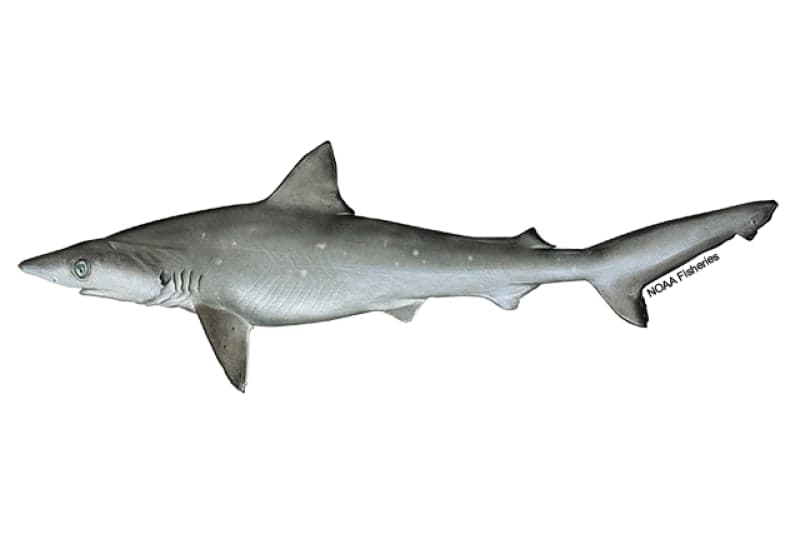
Sharks (Blacktip, Bull, Bonnethead)
Carcharhinus limbatus and others
The honest heavyweights of the surf and bays — from tarpon-jumping blacktips to shrimp-eating bonnetheads to genuinely serious bulls. Land-based shark fishing is a discipline with real responsibilities.
Fresh bait, heavy circle hooks, wire, and a release plan you decided before casting. Blacktips off the beach are a sleigh ride; bonnetheads on shrimp are the light-tackle gateway.
Quick Catch Plan
ID Characteristics
Use these field marks and context clues to separate sharks (blacktip, bull, bonnethead) from similar fish before logging or keeping one.
- Overall look: The honest heavyweights of the surf and bays — from tarpon-jumping blacktips to shrimp-eating bonnetheads to genuinely serious bulls. Land-based shark fishing is a discipline with real responsibilities.
- Typical size: Bonnethead 2–3 ft; blacktip 4–5 ft; bull 6 ft+; trophy class: 7 ft+ (measured and released).
- Most likely setting: surf, beach, pier, inshore, nearshore in Gulf Coast, Florida, Atlantic Coast, Southeast.
- Where to confirm it: Bait pods showering at dusk; rays (blacktip food) in the wash.
- Compared with Blacktip vs spinner shark: Both jump and spin; spinners have a black-tipped anal fin, blacktips don't. Regs can differ.
- Compared with Protected species: Great hammerheads, sandbar, lemon (FL), and others are protected — learn prohibited-species ID BEFORE targeting sharks; when unsure, cut the leader at the hook.
Gear Recommendations
- Rod
- Heavy surf 10–12' or stout boat/jetty rods
- Reel
- 8000–14000 spinning or 6/0 conventional
- Main line
- 65–80 lb braid
- Leader
- 6–10 ft of 100–200 lb mono + 1–2 ft single-strand wire bite section
- Hooks
- 8/0–12/0 NON-STAINLESS, non-offset circle hooks (required in FL from shore)
- Jigheads
- n/a (bonnetheads: jighead + shrimp works)
- Terminal tackle
- Sputnik sinkers 4–8 oz, crimps, quality swivels
- Lure sizes
- n/a
- Lure colors
- n/a
- Baits
- Fresh mullet · Ladyfish (blacktip candy) · Live/fresh shrimp (bonnethead) · Legally-caught fish carcasses
Bonnetheads: a redfish rod, jighead + shrimp on grass flats — real shark fights, manageable scale.
One heavy surf combo, wire rigs, fresh mullet at dusk.
Land-based shark (LBSF) program: kayak-deployed baits, tail ropes, dehooking tools, FL shore-based shark permit + required course, tag-and-release participation.
Techniques
- Presentation
- Fresh bait in a scent lane: the trough at dusk, the pass on outgoing, the pier's down-current side. Fresh beats everything.
- Retrieve
- Circle-hook load; fight hard and FAST — long fights kill sharks meant for release.
- Positioning
- From shore, angle away from swimmers, always; from boats, drift baits at different depths down a chum line.
- Depth
- 3–30 ft coastal.
- Structure
- Troughs, passes, channel edges, bait concentrations.
- Working current
- Scent travels down-current — position accordingly.
Chum + drifted baits; the humane-release toolkit matters even more afloat.
Established shark piers have protocols — learn them; landing is the hard part.
The LBSF classic: big bait past the bar, rod in a heavy spike, drag set to warn.
Bait deployment role, or bonnethead/blacktip fights from the seat — experienced paddlers only.
Bay bonnetheads on light tackle: fun, simple, safe.
Timing & Conditions
- Seasons
- Late spring through fall coastal; FL winter blacktip aggregations.
- Time of day
- Dusk-to-midnight is the window; sharks feed around the clock though.
- Weather
- Warm and stable; a little surf stirs scent.
- Wind
- Deployment logistics, mostly.
- Water temp
- 70–88°F for the common coastal species.
- Tides
- Moving — outgoing at passes is the buffet line.
- Moon
- Bigger tides move more scent; night bites shine either way.
- Pressure
- Minor.
- Seasonal movement
- Strong seasonal coastal migrations (the famous FL blacktip run).
Habitat — Where to Find Them
Every warm US coast: surf zones, passes, bays (bulls run far up rivers; bonnetheads live on flats).
- Depth range
- 2–40 ft for coastal targets.
- Look for
- Bait pods showering at dusk; rays (blacktip food) in the wash.
- Migration
- Temperature-driven; some species aggregate spectacularly.
Common Mistakes
- Stainless or J-hooks — illegal for FL shore sharking and worse for releases everywhere
- Long glory fights and dry-sand drag-ups that kill the shark
- Not knowing prohibited species before the trip
- Casting shark baits near swimmers (ethics, optics, law)
- No release tools at hand: cutters, dehooker, tail rope, measuring tape
Catch, Handling & Release
- Landing
- Keep the shark in the water (required from shore in FL for prohibited species and right everywhere): leave in the wash, control, work fast.
- Handling
- Two people minimum for big fish; never sit on/straddle; watch the tail AND the mouth.
- Release
- Cut the leader close if the hook isn't easily out; walk the fish in knee-deep water facing the waves until it powers off.
- Conservation
- FL shore-based shark fishing requires a no-cost permit + online course, circle hooks, and no-delay release of prohibited species. Every state differs — read the shark section, not just the chart.
Common Lookalikes
Both jump and spin; spinners have a black-tipped anal fin, blacktips don't. Regs can differ.
Great hammerheads, sandbar, lemon (FL), and others are protected — learn prohibited-species ID BEFORE targeting sharks; when unsure, cut the leader at the hook.
Local Regulations
Size limits, bag limits, seasons, and gear rules change every year and differ by state (and often by individual water). Always verify with the official source before keeping fish.
All state sources for this species
Guide data is editorial and general — conditions, regulations, and fish behavior vary by water. Photo: Wikipedia — Blacktip shark.
