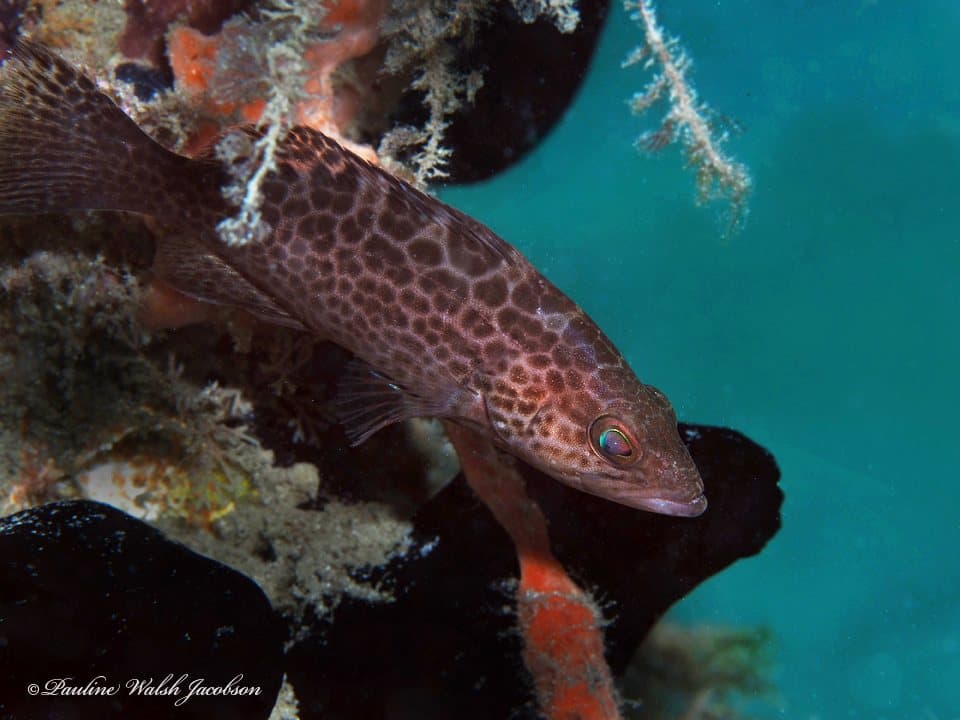
Scamp Grouper
Mycteroperca phenax
A prized deep-reef grouper with extended tail rays, delicate table quality, and a preference for clean ledges that reward precise deep bottom fishing.
Scamp are a precision deep-ledge fish. Scale tackle to the fish, not just the depth, and fish clean presentations on good bottom.
Quick Catch Plan
ID Characteristics
Use these field marks and context clues to separate scamp grouper from similar fish before logging or keeping one.
- Overall look: A prized deep-reef grouper with extended tail rays, delicate table quality, and a preference for clean ledges that reward precise deep bottom fishing.
- Typical size: 4-10 lb; trophy class: 15 lb+.
- Most likely setting: reef, wreck, offshore in Gulf Coast, Florida, Southeast, Atlantic Coast.
- Where to confirm it: Clean ledge relief, bait marks, and mixed snapper/grouper life.
- Compared with Gag/black grouper: Scamp have a more slender body, extended tail filaments, and smaller brown spots rather than bold gag/black markings.
Gear Recommendations
- Rod
- 6'-6'6" medium-heavy jigging/bottom rod
- Reel
- Conventional or 6000-10000 spinning
- Main line
- 50-65 lb braid
- Leader
- 50-70 lb fluorocarbon
- Hooks
- 5/0-7/0 circle hooks
- Jigheads
- 150-300 g slow-pitch jigs
- Terminal tackle
- Knocker rigs, chicken rigs, 8-16 oz sinkers, descending device
- Lure sizes
- Small live baits; 150-300 g jigs
- Lure colors
- Glow, pink, silver, sardine
- Baits
- Live sardines · Small pinfish · Squid · Cigar minnows
Entry point: fish a charter, party boat, or known public reef with Live sardine or small pinfish on 5/0-7/0 circle with 50-70 lb leader.. Use stout tackle and practice gaining line immediately after the bite.
A single heavy bottom combo, knocker/fish-finder rigs, and a marked reef list will catch scamp grouper when conditions and seasons line up.
The program: sonar homework for low-pressure bottom, spot-lock/precise anchoring, live bait, high drag, and descending gear ready before the first drop.
Techniques
- Presentation
- Small live baits or jigs just above deep ledges; avoid burying rigs in rough bottom.
- Retrieve
- Firm first lift, then steady pressure; scamp fight hard but less dirty than big gags.
- Positioning
- Drift/spot-lock to keep rigs vertical over deep relief.
- Depth
- 90-350 ft
- Structure
- Deep ledges, shelf-edge reefs, live bottom, and wrecks.
- Working current
- Current positions fish; too much scope makes deep fishing ineffective.
Deep bottom fishing and slow-pitch jigging over ledges.
Timing & Conditions
- Seasons
- Year-round where open, subject to grouper closures.
- Time of day
- Daytime deep structure windows.
- Weather
- Stable offshore weather.
- Wind
- Low enough for deep vertical control.
- Water temp
- Best in warm shelf waters.
- Tides
- Current windows.
- Moon
- Minor.
- Pressure
- Minor.
- Seasonal movement
- Deep reef resident with seasonal spawning behavior.
Habitat — Where to Find Them
Deep reef and ledge grouper of the Gulf and South Atlantic shelf.
- Depth range
- 90-350 ft
- Look for
- Clean ledge relief, bait marks, and mixed snapper/grouper life.
- Migration
- Mostly resident on deeper reef systems.
Common Mistakes
- Overly large bait
- Fishing too heavy and dead
- Losing vertical control
- No descending device
- Misidentifying scamp among groupers
Catch, Handling & Release
- Landing
- Net or gaff legal keepers.
- Handling
- Ice quickly; prized eating.
- Release
- Descending devices are essential from depth.
- Conservation
- Scamp fall under grouper management with area/season rules; verify current regulations.
Common Lookalikes
Scamp have a more slender body, extended tail filaments, and smaller brown spots rather than bold gag/black markings.
Local Regulations
Size limits, bag limits, seasons, and gear rules change every year and differ by state (and often by individual water). Always verify with the official source before keeping fish.

All state sources for this species
Guide data is editorial and general — conditions, regulations, and fish behavior vary by water. Photo: Wikipedia — Scamp grouper.
