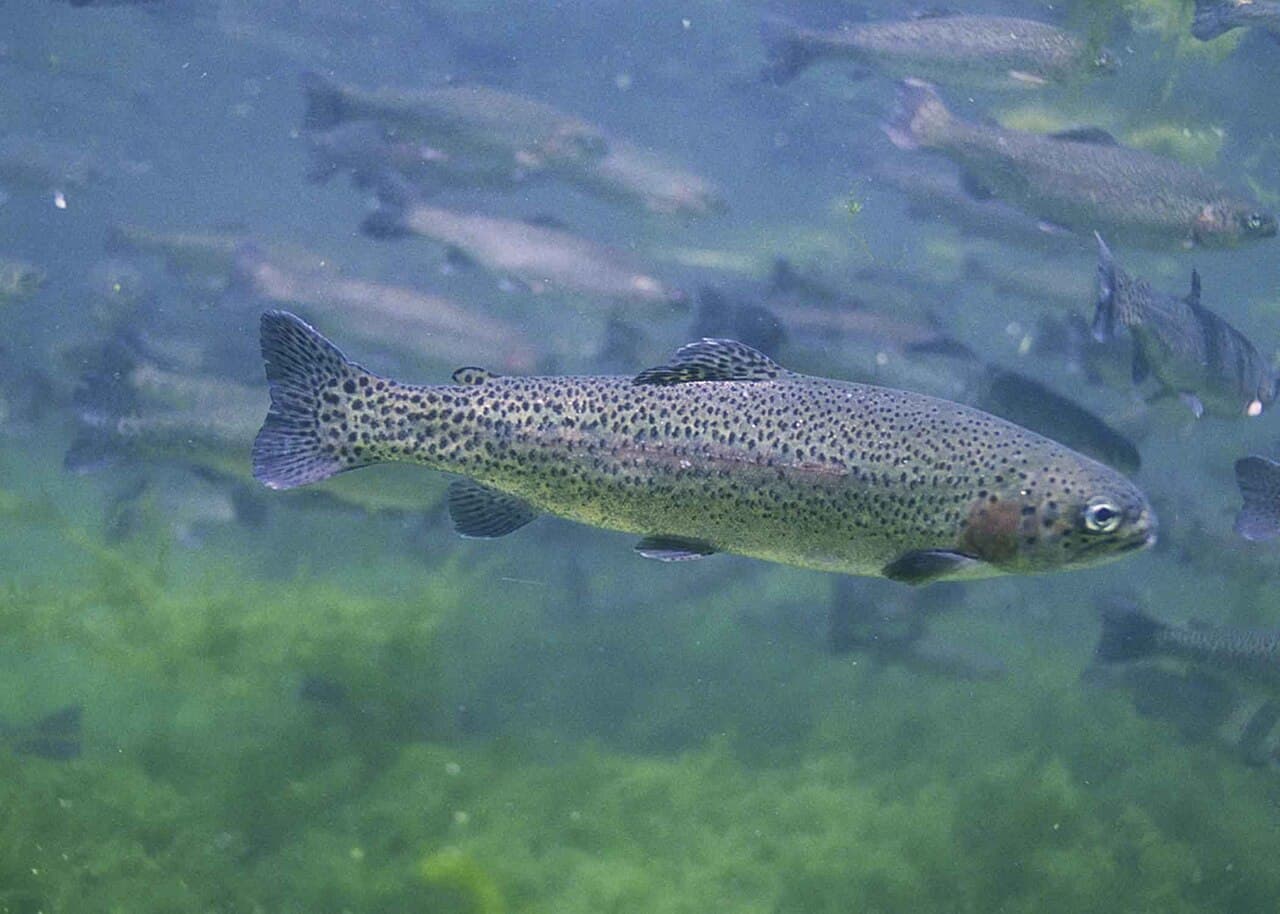
Rainbow Trout
Oncorhynchus mykiss
The most-stocked trout in America and the gateway to cold-water fishing — from hatchery ponds to wild western rivers, rainbows eat flies, lures, and bait with equal enthusiasm.
Stocked rainbows eat dough bait and worms near the stocking point; wild rainbows eat drifting insects and small fish in moving water. Match your approach to which fish you're on.
Quick Catch Plan
ID Characteristics
Use these field marks and context clues to separate rainbow trout from similar fish before logging or keeping one.
- Overall look: The most-stocked trout in America and the gateway to cold-water fishing — from hatchery ponds to wild western rivers, rainbows eat flies, lures, and bait with equal enthusiasm.
- Typical size: 10–16 in; trophy class: 5 lb+ (steelhead-class fish 10 lb+).
- Most likely setting: river, creek, lake, pond in West, Pacific Northwest, Northeast, Midwest, Southeast.
- Where to confirm it: Moving water meeting slow water, with depth and oxygen. In lakes: inlets and the deepest cool water.
- Compared with Brown trout: Rainbows have a pink lateral stripe and spots on the tail; browns are golden with red-and-black spots and a nearly spotless tail.
- Compared with Brook trout: Brookies have light worm-like markings on a dark back and white-edged fins; rainbows have dark spots on a light body.
Gear Recommendations
- Rod
- 6'–7' ultralight to light spinning; 9' 5-wt fly rod
- Reel
- 1000–2500 spinning
- Main line
- 4 lb mono or 8 lb braid
- Leader
- 4 lb fluorocarbon, 3 ft
- Hooks
- #8–#12 baitholder or single egg hooks
- Jigheads
- 1/16–1/8 oz marabou jig heads
- Terminal tackle
- Small barrel swivels, split shot, sliding egg sinkers for still water
- Lure sizes
- 1/16–1/4 oz spinners and spoons
- Lure colors
- Gold/silver blades, rainbow/fire-tiger spoons, white or olive jigs
- Baits
- PowerBait/dough bait (stocked fish) · Nightcrawlers · Salmon eggs · Waxworms · Corn where legal
Light spinning combo, 4 lb line, sliding sinker + 18" leader + floating dough bait. Cast, prop the rod, watch the tip.
Same combo plus 3 spinners and a small box of hooks/shot — covers lakes and creeks.
5-wt fly setup with indicator nymph rigs and dry flies, plus an UL spinning rig with 2 lb fluoro for pressured fish.
Techniques
- Presentation
- Still water: float dough bait 18" off bottom. Rivers: cast spinners slightly up-and-across, retrieve just faster than current; drift baits naturally through pools.
- Retrieve
- Slow-medium steady for spinners — the blade must thump. Twitch-pause spoons near drop-offs.
- Positioning
- Fish upstream of pools facing down-current feeders; stay low and quiet on small creeks.
- Depth
- Streams: the head and gut of pools. Lakes: 5–15 ft near inlets, deeper in summer.
- Structure
- Current seams, undercut banks, boulders, inlet mouths, dam faces of stocked lakes.
- Working current
- Trout face upstream — present baits drifting to them, not dragging past unnaturally.
Slow-troll small spoons with split shot 100 ft back at 1.5 mph.
Troll or drift baits along lake drop-offs and inlet plumes.
Stocked lakes: near the ramp/inlet where trucks dump fish. Creeks: leapfrog pools upstream.
Timing & Conditions
- Seasons
- Spring and fall are prime; winter stocked-water fishing is underrated; summer pushes fish deep or upstream to cold water.
- Time of day
- Morning/evening; hatch windows can flip a switch mid-day.
- Weather
- Overcast drizzle is trout weather; bright sun = fish deeper or in shade seams.
- Wind
- A light ripple helps lake bites; wind-blown shorelines gather food.
- Water temp
- Active 45–65°F; stop targeting above 68°F (high mortality).
- Pressure
- Hatches often pop as fronts approach — fish the change.
- Seasonal movement
- Stocked fish linger near release points for weeks; wild fish shift to cold tributaries and springs in summer.
Habitat — Where to Find Them
Cold streams, tailwaters, mountain lakes, and stocked urban ponds nationwide — the most accessible trout in the country.
- Depth range
- 2–20 ft.
- Look for
- Moving water meeting slow water, with depth and oxygen. In lakes: inlets and the deepest cool water.
- Migration
- Lake-run and steelhead strains migrate to spawn; resident stream fish move short distances to thermal refuges.
Common Mistakes
- Fishing dough bait on the bottom without floating it up
- Line too heavy — trout in clear water see 8 lb mono easily
- Retrieving spinners downstream faster than anything alive swims
- Stomping the bank of a small creek before casting
- Targeting trout in warm summer water and releasing dying fish
Catch, Handling & Release
- Landing
- Rubber mesh net; keep fish in the water.
- Handling
- Always wet hands — trout slime is fragile; never squeeze.
- Release
- Face upstream in current until it swims off. Deeply hooked bait fish: cut the line, don't dig.
- Conservation
- Trout rules are water-specific (bait bans, barbless zones, seasons, stamps) — read your state's trout supplement.
Common Lookalikes
Rainbows have a pink lateral stripe and spots on the tail; browns are golden with red-and-black spots and a nearly spotless tail.
Brookies have light worm-like markings on a dark back and white-edged fins; rainbows have dark spots on a light body.
Local Regulations
Size limits, bag limits, seasons, and gear rules change every year and differ by state (and often by individual water). Always verify with the official source before keeping fish.

All state sources for this species
Guide data is editorial and general — conditions, regulations, and fish behavior vary by water. Photo: Wikipedia — Rainbow trout.
