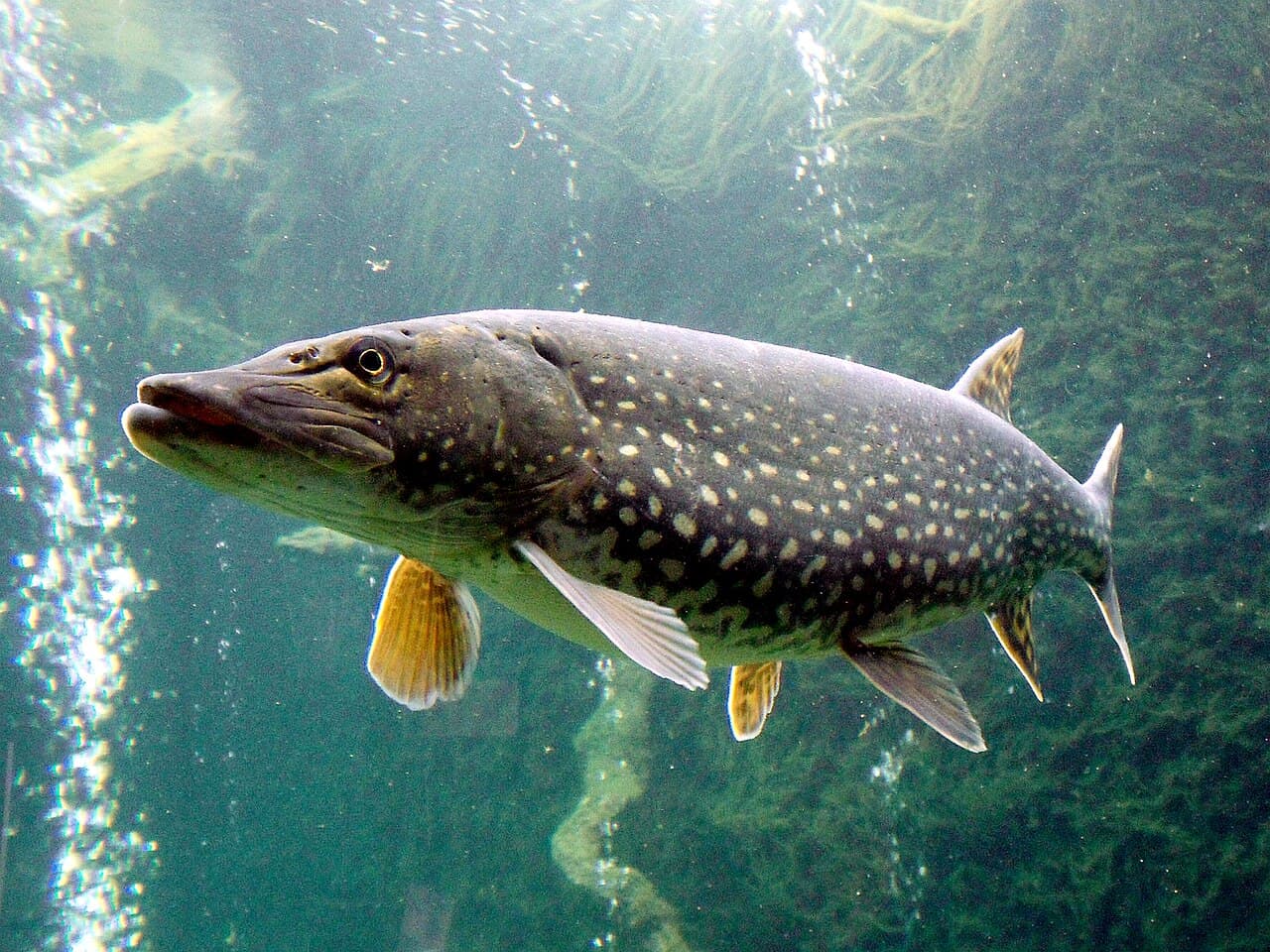
Northern Pike
Esox lucius
The water wolf — an aggressive ambush predator with a mouth full of teeth that attacks lures half its size. Pike make slow days exciting and beginners feel like heroes.
Throw something big and flashy near weeds and hold on. Pike are the most cooperative large predator in freshwater — wire leaders and pliers are the only real requirements.
Quick Catch Plan
ID Characteristics
Use these field marks and context clues to separate northern pike from similar fish before logging or keeping one.
- Overall look: The water wolf — an aggressive ambush predator with a mouth full of teeth that attacks lures half its size. Pike make slow days exciting and beginners feel like heroes.
- Typical size: 2–8 lb (20–30 in); trophy class: 40 in+ / 15 lb+.
- Most likely setting: lake, river in Midwest, Northeast, West.
- Where to confirm it: Healthy green weeds + baitfish + access to deeper water.
- Compared with Muskie: Pike have light bean-shaped spots on a dark body; muskie are dark-on-light with bars/spots. Pike have 5 or fewer submandibular pores per side, muskie 6+.
- Compared with Chain pickerel: Pickerel are smaller with a chain-link pattern and fully scaled cheeks.
Gear Recommendations
- Rod
- 7'–8' MH fast
- Reel
- 4000 spinning or 300-size baitcaster
- Main line
- 30–50 lb braid
- Leader
- Knottable wire (20–30 lb) or 60–80 lb fluoro, 12–18"
- Hooks
- 4/0–6/0 for bait rigs; quick-strike rigs for dead bait
- Jigheads
- 1/2–1 oz swimbait heads
- Terminal tackle
- Heavy snaps, quality split rings — pike destroy cheap hardware
- Lure sizes
- 4–8" lures; bigger in fall
- Lure colors
- Red/white, five-of-diamonds, firetiger, white, gold
- Baits
- Live suckers 6–10" · Dead smelt/herring on bottom (early spring) · Big shiners under floats
MH combo, 40 lb braid, steel leader, one big spoon — cast weedlines until it happens.
Add a #5 spinner and a soft swimbait; that covers 90% of pike water.
Dedicated 8' rods for big rubber, quick-strike dead-bait rigs for trophies, jaw spreaders + long pliers + cut-resistant glove.
Techniques
- Presentation
- Cast past the weed edge, retrieve along it. Pike follow — use a figure-8 at the boat instead of lifting the lure out.
- Retrieve
- Steady with speed bursts; slower and bigger in fall; deadstick dead baits in early spring.
- Positioning
- Parallel to weed edges; in rivers, work backwater mouths and slack bays.
- Depth
- 2–10 ft spring; weed edges 8–15 ft summer; big fish 15–30 ft near bait in warm mid-summer.
- Structure
- Cabbage beds, bulrush edges, dark-bottom bays, beaver lodges, river backwaters.
- Working current
- Pike avoid heavy current — fish the softest water on the river.
Drift or troll weedlines with spoons; cast swimbaits at pockets.
Careful with unhooking teeth in your lap — bring a jaw spreader and net.
Ice-out bays and river backwaters are prime from the bank.
Timing & Conditions
- Seasons
- Ice-out through early June and September–October are peak; deep bite mid-summer; classic ice-fishing target.
- Time of day
- Daytime feeder — 9 a.m. pike are real. Low light still best for giants.
- Weather
- Cloudy with chop; pre-storm pike go feral.
- Wind
- Wind-blown weed edges out-fish calm ones.
- Water temp
- Big fish prefer <65°F water; in heat they follow cold water down.
- Pressure
- Aggressive enough to bite through most fronts.
- Seasonal movement
- Shallow bays (spawn, ice-out) → weedlines (summer) → deep bait schools (late summer) → shallows again (fall).
Habitat — Where to Find Them
Weedy natural lakes, reservoirs, and slow rivers across the northern tier.
- Depth range
- 2–30 ft by season.
- Look for
- Healthy green weeds + baitfish + access to deeper water.
- Migration
- Short: bays to weedlines to deep edges and back.
Common Mistakes
- No leader — one bite-off loses your lure and hurts the fish
- Lifting the lure at the boat instead of figure-8ing followers
- Cheap split rings and snaps opening on big fish
- Fishing dead water in mid-summer heat instead of deep edges
- Grabbing a green pike's mouth — always use pliers and control the fish first
Catch, Handling & Release
- Landing
- Big rubber net; let the fish tire — pike thrash violently at the side.
- Handling
- Grip under the gill plate (not the gills), support the belly. Long pliers, jaw spreader, glove.
- Release
- Big pike are fragile in warm water — quick photos, hold upright until it kicks.
- Conservation
- Many states protect large pike with slots or one-over rules; some encourage harvest of small 'hammer handles'.
Common Lookalikes
Pike have light bean-shaped spots on a dark body; muskie are dark-on-light with bars/spots. Pike have 5 or fewer submandibular pores per side, muskie 6+.
Pickerel are smaller with a chain-link pattern and fully scaled cheeks.
Local Regulations
Size limits, bag limits, seasons, and gear rules change every year and differ by state (and often by individual water). Always verify with the official source before keeping fish.

All state sources for this species
Guide data is editorial and general — conditions, regulations, and fish behavior vary by water. Photo: Wikipedia — Northern pike.
