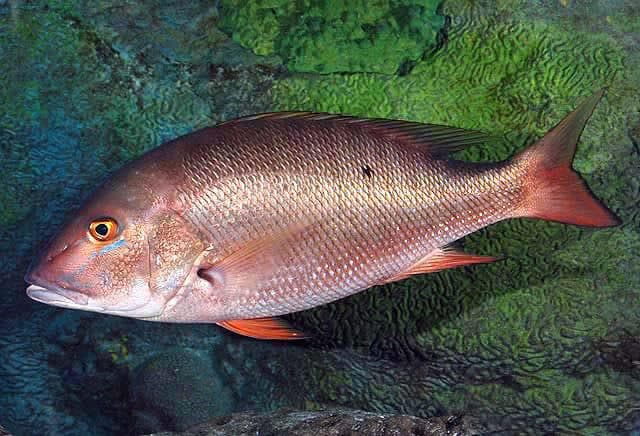
Mutton Snapper
Lutjanus analis
A wary, long-ranging reef snapper with pink flanks, a black side spot, and a taste for long leaders and natural presentations on sand beside reef.
Muttons are smart reef roamers: fish the sand beside structure, lengthen the leader, and give live bait room to move naturally.
Quick Catch Plan
ID Characteristics
Use these field marks and context clues to separate mutton snapper from similar fish before logging or keeping one.
- Overall look: A wary, long-ranging reef snapper with pink flanks, a black side spot, and a taste for long leaders and natural presentations on sand beside reef.
- Typical size: 5-12 lb; trophy class: 15 lb+.
- Most likely setting: reef, wreck, nearshore, offshore, flats in Florida, Southeast, Atlantic Coast, Gulf Coast.
- Where to confirm it: Sand halos, current-swept reef edges, and isolated marks off structure.
- Compared with Lane snapper: Mutton snapper grow much larger, have a single black side spot, blue facial lines, and no yellow lane stripes.
Gear Recommendations
- Rod
- 7' medium-heavy fast spinning or conventional
- Reel
- 5000-8000 spinning or light conventional
- Main line
- 30-50 lb braid
- Leader
- 30-50 lb fluorocarbon, often 15-30 ft
- Hooks
- 4/0-7/0 circle hooks
- Jigheads
- 1-3 oz bucktails
- Terminal tackle
- Long-leader fish-finder rig, egg sinkers, minimal hardware
- Lure sizes
- 4-8" baits; 1-4 oz jigs
- Lure colors
- Natural, pink, white, chartreuse
- Baits
- Pilchards · Ballyhoo · Pinfish · Goggle-eyes · Speedos
Simple start: 7' medium-heavy fast spinning or conventional, 5000-8000 spinning or light conventional, 30-50 lb fluorocarbon, often 15-30 ft, and Live pilchard, ballyhoo, or pinfish on a long 30-50 lb fluoro leader.. Fish the easiest public structure first and keep the bait natural.
One versatile spinning setup, a small hook box, fluorocarbon from 20 to 40 lb, and fresh bait cover most mutton snapper trips.
Build a chum-and-flatline program: anchor up-current, start light, feed unweighted baits naturally, and adjust leader size until the larger fish commit.
Techniques
- Presentation
- Long leader, bait on or just above sand, with enough slack for a natural swim.
- Retrieve
- Let the fish turn with the bait, then wind into the circle hook and keep steady pressure.
- Positioning
- Anchor up-current of reef edges and cast baits back to the sand/reef transition.
- Depth
- 20-250 ft
- Structure
- Sand edges beside reef, wrecks, patch reefs, and deeper ledges.
- Working current
- Moderate current gets them roaming; too much makes long leaders hard to control.
Long-leader bait fishing around reefs and wrecks.
Nearshore reefs can produce, but big muttons demand room and control.
Timing & Conditions
- Seasons
- Year-round in South Florida, with spring/summer moon peaks.
- Time of day
- Dawn, dusk, and moonlit nights.
- Weather
- Clear fishable reef conditions.
- Wind
- Light enough to anchor accurately.
- Water temp
- Best 72-84°F.
- Tides
- Moving tide/current.
- Moon
- Strong around full-moon spawning periods where legal.
- Pressure
- Clear-water pressure demands stealth.
- Seasonal movement
- Adults roam reef edges and aggregate seasonally.
Habitat — Where to Find Them
Warm reef systems where sand patches meet hard structure, from Keys patch reefs to deeper ledges.
- Depth range
- 20-250 ft
- Look for
- Sand halos, current-swept reef edges, and isolated marks off structure.
- Migration
- Local reef movements plus seasonal spawning aggregations.
Common Mistakes
- Short heavy leaders in clear water
- Dropping directly into snaggy reef instead of nearby sand
- Setting hard with circles
- Ignoring moon/current windows
- Fishing closed aggregation areas
Catch, Handling & Release
- Landing
- Net or gaff legal keepers after they clear structure.
- Handling
- Teeth and spines require pliers and control.
- Release
- Use descending devices from depth.
- Conservation
- Mutton snapper rules are strict and area-specific; verify current size, bag, and seasonal closures.
Common Lookalikes
Mutton snapper grow much larger, have a single black side spot, blue facial lines, and no yellow lane stripes.
Local Regulations
Size limits, bag limits, seasons, and gear rules change every year and differ by state (and often by individual water). Always verify with the official source before keeping fish.

All state sources for this species
Guide data is editorial and general — conditions, regulations, and fish behavior vary by water. Photo: Wikipedia — Mutton snapper.
