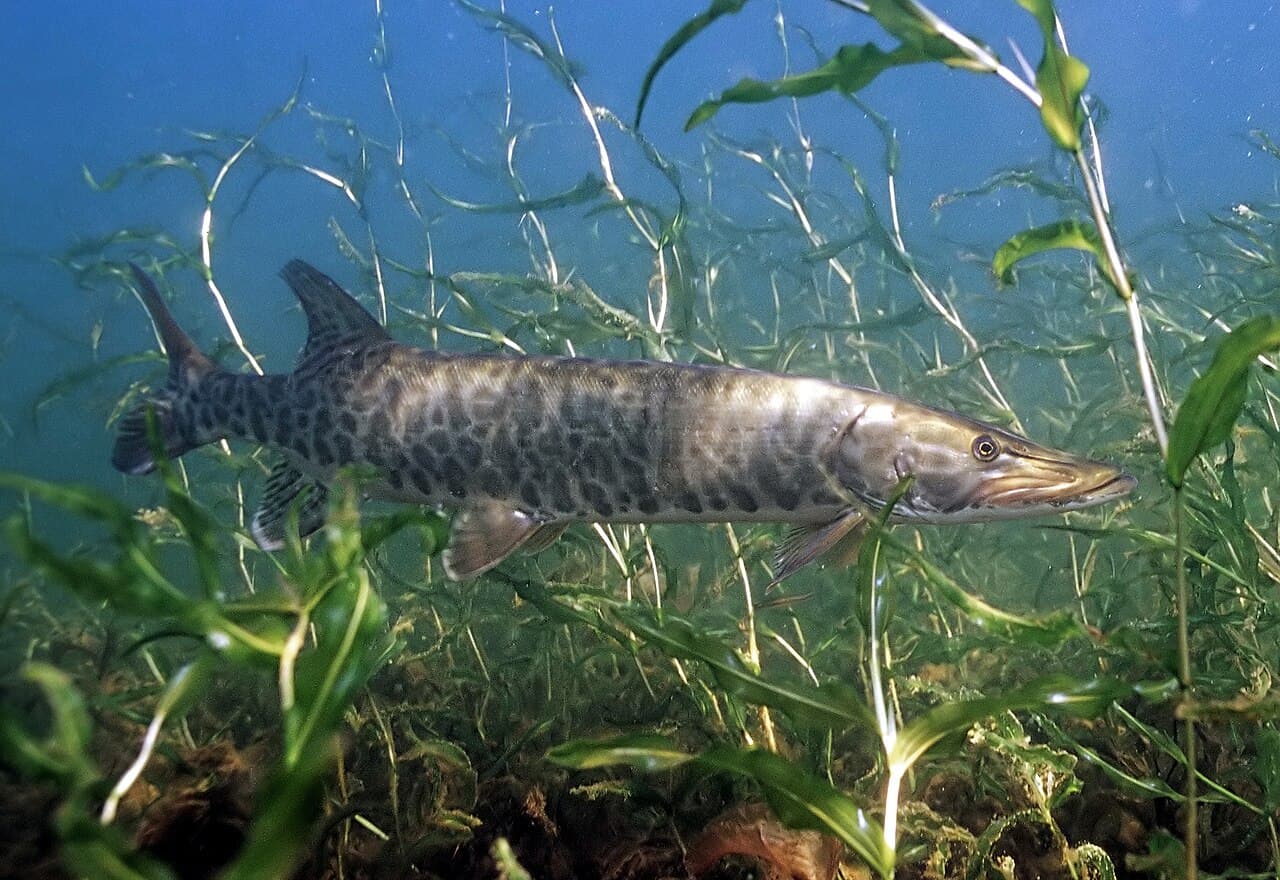
Muskellunge (Muskie)
FreshwaterIn season now

Muskellunge (Muskie)

Esox masquinongy

The fish of 10,000 casts — the apex predator of northern lakes. Muskie fishing is a discipline: heavy gear, giant lures, figure-8s, and the mental fortitude to grind for one bite that makes a season.

Typical size
34–44 in
Trophy class
50 in+ / 30 lb+
Expert

Commit to the grind: cast big lures to prime structure through the best moon/weather windows, finish every cast with a figure-8, and be genuinely ready when the one fish shows up.

Quick Catch Plan

Best bait right now
Double-10 bucktail burned over weed tops; switch to big rubber (Bull Dawg-style) when they follow but don't eat
Recommended lure
Double-blade bucktails, 10–14" soft baits, walk-the-dog topwaters at dusk
Setup
8'6"–9' extra-heavy rod, 400-size baitcaster, 80 lb braid, 130 lb fluoro leader
Where to go
Weed flats adjacent to deep water, rock bars, river confluences
Best time
Dusk, moonrise/moonset windows, and pre-frontal afternoons
Season notes
Fall sucker season (water <55°F) is the biggest-fish window — live suckers on quick-strike rigs while casting.

ID Characteristics

Use these field marks and context clues to separate muskellunge (muskie) from similar fish before logging or keeping one.

  • Overall look: The fish of 10,000 casts — the apex predator of northern lakes. Muskie fishing is a discipline: heavy gear, giant lures, figure-8s, and the mental fortitude to grind for one bite that makes a season.
  • Typical size: 34–44 in; trophy class: 50 in+ / 30 lb+.
  • Most likely setting: lake, river in Midwest, Northeast.
  • Where to confirm it: The best weed/rock edge closest to the lake's food-richest basin.
  • Compared with Northern pike: Muskie are light with dark bars/spots and have 6–9 submandibular pores per side; pike are dark with light spots.
  • Compared with Tiger muskie: Tigers (pike × muskie hybrid) show bold irregular vertical bars and rounded fins.

Gear Recommendations

Rod
8'–9' XH with a long handle for figure-8s
Reel
400-size low-profile or round baitcaster, 5.3–6.3:1
Main line
80–100 lb braid
Leader
100–130 lb fluorocarbon or wire, 12–14"
Hooks
Quick-strike rigs (#2–1/0 trebles) for suckers
Terminal tackle
Heavy-duty snaps rated 100 lb+
Lure sizes
8–14" as the norm
Lure colors
Black, black/orange, white, firetiger — dark for silhouette, bright for stained water
Baits
12–16" live suckers (fall)
Beginner setup

Rent the gear or start with one 8'6" XH combo, a double-10 bucktail, and a topwater — and learn the figure-8 before anything else.

Budget setup

Add one big rubber bait and a quality 60" net (the net IS muskie gear).

Serious angler

Rod quiver (bucktail, rubber, jerkbait, topwater), moon-phase logbook, release tools: 8" pliers, hook cutters, spreaders, bump board that keeps fish horizontal.

Techniques

Presentation
Speed and profile trigger muskies. Burn bucktails; glide jerkbaits with long pauses; big rubber pulled in surges near bottom.
Retrieve
End EVERY cast with a deep, wide figure-8 — a third of muskies eat boatside.
Positioning
Keep the boat off structure edges; long casts over weed flats and rock bars.
Depth
5–15 ft over weeds and rock most of season; deeper edges late fall.
Structure
Weed flats near basins, rock bars, points, saddles between islands, river junctions.
Working current
River muskies use seam edges and hole heads like giant smallmouth.
boat fishing

Essential for covering water and executing figure-8s; spot-lock on prime edges during windows.

kayak fishing

Hardcore but done — net, tools, and fish care get complicated; fight fish hard and fast.

Timing & Conditions

Seasons
June weed bite, August night topwater, and the legendary fall giants until ice.
Time of day
Dawn/dusk plus moon windows (moonrise/set, majors) — muskie anglers plan around them.
Weather
Pre-frontal southwest wind afternoons are famous; post-front is the grind.
Wind
Wind-on structure is the rule; the calm side is dead water.
Water temp
Avoid targeting above 80°F — release mortality gets severe. Peak: 55–72°F.
Moon
Muskie culture tracks moon majors/minors for good reason — windows concentrate feeding.
Pressure
Falling barometer = go; the bite window may be 20 minutes, be casting through it.
Seasonal movement
Weed-oriented early, roaming bait-followers late summer, staging on hard structure edges in fall.

Habitat — Where to Find Them

Clear northern lakes, flowages, and big rivers — Wisconsin/Minnesota heartland plus quality fisheries through the Ohio Valley and East.

Depth range
3–25 ft.
Look for
The best weed/rock edge closest to the lake's food-richest basin.
Migration
Local but patterned: same fish, same spots, same windows, year after year.
weed flatsrock barssaddlespointsriver confluences

Common Mistakes

  • Skipping the figure-8 (the #1 lost-fish cause)
  • Under-sized nets and no release tools — decide fish care before you hook one
  • Fishing memories instead of conditions — windows matter more than spots
  • Weak hooksets: plant your feet and drive it 2–3 times
  • Targeting muskies in hot water

Catch, Handling & Release

Landing
60"+ coated net used as an in-water pen while you unhook.
Handling
Fish stays horizontal and wet; hands under jaw plate and belly; never vertical, never on carpet.
Release
Water release without lifting when possible; photos in seconds, fish facing current until strong.
Conservation
High minimums (40–54") and single-fish or catch-and-release-only seasons are the norm — know your water exactly.

Common Lookalikes

Northern pike

Muskie are light with dark bars/spots and have 6–9 submandibular pores per side; pike are dark with light spots.

Tiger muskie

Tigers (pike × muskie hybrid) show bold irregular vertical bars and rounded fins.

Guide data is editorial and general — conditions, regulations, and fish behavior vary by water. Photo: Wikipedia — Muskellunge.