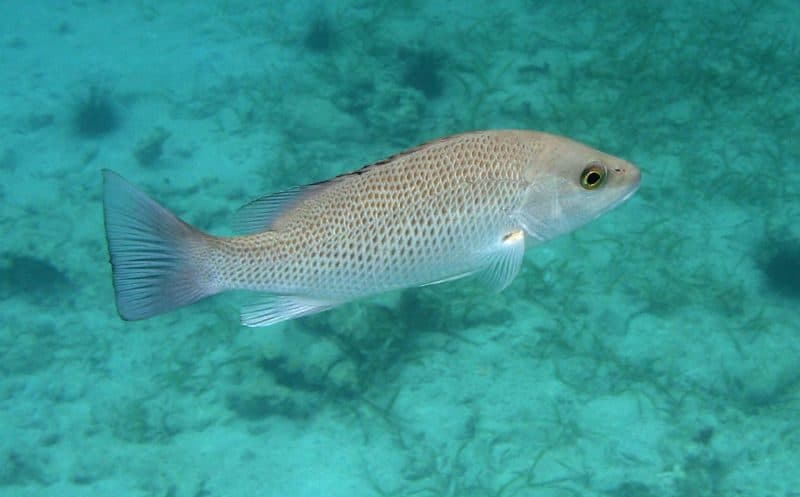
Mangrove Snapper (Gray Snapper)
Lutjanus griseus
The sharp-eyed dock and reef snapper that turns leader choice into a chess match: easy to find, easy to spook, and excellent on the table.
Mangroves reward stealth: lighten leader, hide the hook, and let bait drift naturally in the chum line or light shadow.
Quick Catch Plan
ID Characteristics
Use these field marks and context clues to separate mangrove snapper (gray snapper) from similar fish before logging or keeping one.
- Overall look: The sharp-eyed dock and reef snapper that turns leader choice into a chess match: easy to find, easy to spook, and excellent on the table.
- Typical size: 1-4 lb; trophy class: 8 lb+.
- Most likely setting: reef, wreck, nearshore, offshore, inshore in Gulf Coast, Florida, Southeast, Atlantic Coast.
- Where to confirm it: Current seams, shadow lines, bait, and fish flashing in dock lights.
- Compared with Cubera snapper: Cubera have oversized canine teeth and grow much larger; big offshore 'mangroves' deserve a close look before harvest.
Gear Recommendations
- Rod
- 7' medium fast spinning
- Reel
- 3000-4000 spinning
- Main line
- 10-15 lb braid
- Leader
- 20-30 lb fluorocarbon; drop lighter when clear and pressured
- Hooks
- #1-2/0 short-shank live-bait hooks
- Jigheads
- 1/16-1/4 oz for shrimp or small baitfish
- Terminal tackle
- Minimal hardware, split shot only when needed, small chum bag
- Lure sizes
- 2-4" shrimp/baitfish profiles
- Lure colors
- Natural, clear, glow at night
- Baits
- Live shrimp · Pilchards · Small pinfish · Sardine chunks · Cut ballyhoo
Simple start: 7' medium fast spinning, 3000-4000 spinning, 20-30 lb fluorocarbon; drop lighter when clear and pressured, and Live shrimp or pilchard on a #1-2/0 hook with 20-30 lb fluorocarbon.. Fish the easiest public structure first and keep the bait natural.
One versatile spinning setup, a small hook box, fluorocarbon from 20 to 40 lb, and fresh bait cover most mangrove snapper (gray snapper) trips.
Build a chum-and-flatline program: anchor up-current, start light, feed unweighted baits naturally, and adjust leader size until the larger fish commit.
Techniques
- Presentation
- Free-line when possible; if weight is needed, use just enough to drift naturally beside structure.
- Retrieve
- Quick sweep and immediate pressure before the fish reaches pilings or roots.
- Positioning
- Set up up-current and pull fish away from cover with chum before casting.
- Depth
- 3-120 ft
- Structure
- Docks, bridges, mangrove roots, reefs, wrecks, and rock piles.
- Working current
- Moving tide carries chum and makes the bite; slack is slow.
Chum reefs and flat-line baits back naturally.
Work pilings at night with light leader.
Quiet approaches to mangroves and nearshore patch reefs shine.
Fish seawalls, bridges, and dock lights with shrimp.
Timing & Conditions
- Seasons
- Year-round in warm areas; best spring through fall.
- Time of day
- Night is prime around lights; dawn/dusk also good.
- Weather
- Clear water helps sight-feeding but demands lighter leader.
- Wind
- Manageable wind for accurate casts near cover.
- Water temp
- Best 70-86°F.
- Tides
- Moving tide.
- Moon
- Summer moon periods can improve reef bites.
- Pressure
- High pressure makes them leader-shy.
- Seasonal movement
- Juveniles use inshore cover; larger fish shift to reefs and wrecks.
Habitat — Where to Find Them
A structure-loving snapper from mangrove roots and docks to offshore reefs as it grows.
- Depth range
- 3-120 ft
- Look for
- Current seams, shadow lines, bait, and fish flashing in dock lights.
- Migration
- Mostly local inshore-to-offshore movement with age and season.
Common Mistakes
- Leader too heavy
- Too much weight killing the drift
- Casting directly into cover instead of pulling fish out
- Slow pressure after hookset
- Ignoring night dock-light bites
Catch, Handling & Release
- Landing
- Net better fish or swing small ones quickly away from cover.
- Handling
- Canine teeth and dorsal spines are real; use pliers.
- Release
- Release shallow fish quickly; descend deeper reef fish if needed.
- Conservation
- State snapper limits vary; verify current size and bag limits, especially in Florida and Gulf states.
Common Lookalikes
Cubera have oversized canine teeth and grow much larger; big offshore 'mangroves' deserve a close look before harvest.
Local Regulations
Size limits, bag limits, seasons, and gear rules change every year and differ by state (and often by individual water). Always verify with the official source before keeping fish.
All state sources for this species
Guide data is editorial and general — conditions, regulations, and fish behavior vary by water. Photo: Wikipedia — Mangrove snapper.
