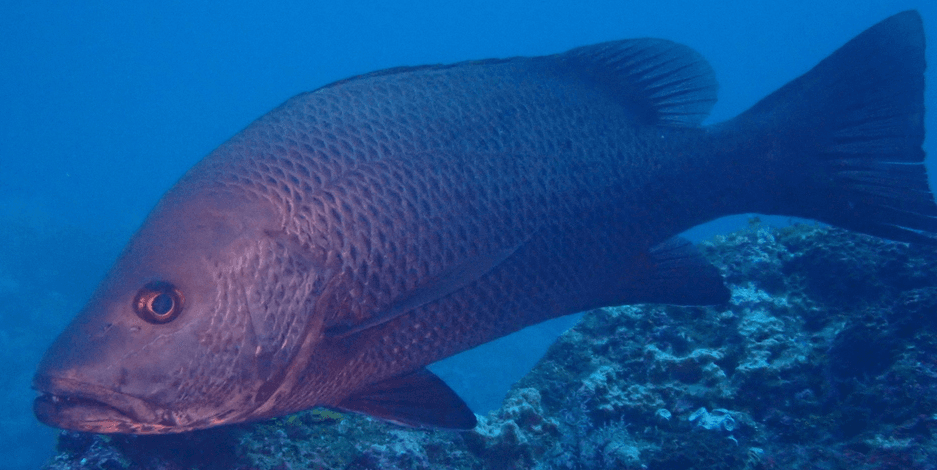
Lutjanus argentimaculatus
A hard-hitting reddish snapper that lives in mangrove creeks and estuaries as a juvenile before moving to offshore reefs with age. Mangrove jack (jenahak merah, ikan tanda) ambush prey from cover and bury you in the roots in a heartbeat — pound-for-pound one of the toughest estuary fish going.
Estuary mangrove jack sit deep in snags, roots, and rock and ambush anything that passes. Present live prawns and baitfish or lures tight to cover, then lock up hard the instant they hit or they'll bury you. Bigger fish move to coastal reefs and rubble, where they fight just as dirty in deeper water.
Guide data is editorial and general — conditions, regulations, and fish behavior vary by water. Photo: Wikipedia — Mangrove red snapper.
Use these field marks and context clues to separate mangrove jack from similar fish before logging or keeping one.
Match a rig to Mangrove Jack with the Setup Builder, or browse all setups.
Cast tight to snag lines and reef edges; use the boat to pull fish to open water after the hookup.
Sneak into tight creek pockets and present to roots larger boats can't reach.
Bridges, jetties, and rock walls at night on the tide are prime land-based jack spots.
A structure-loving snapper that starts life in mangrove estuaries and creeks and shifts to coastal and offshore reefs with age.
Silver with a sloped head; mangrove jack are reddish with a blunter head and canine teeth.
Mangrove jack are deep red-brown in estuaries, coppery on reefs, with prominent canines and a slightly forked tail.
Size limits, bag limits, seasons, and gear rules change every year and differ by country and province (and often by individual water). Always verify with the official source before keeping fish.