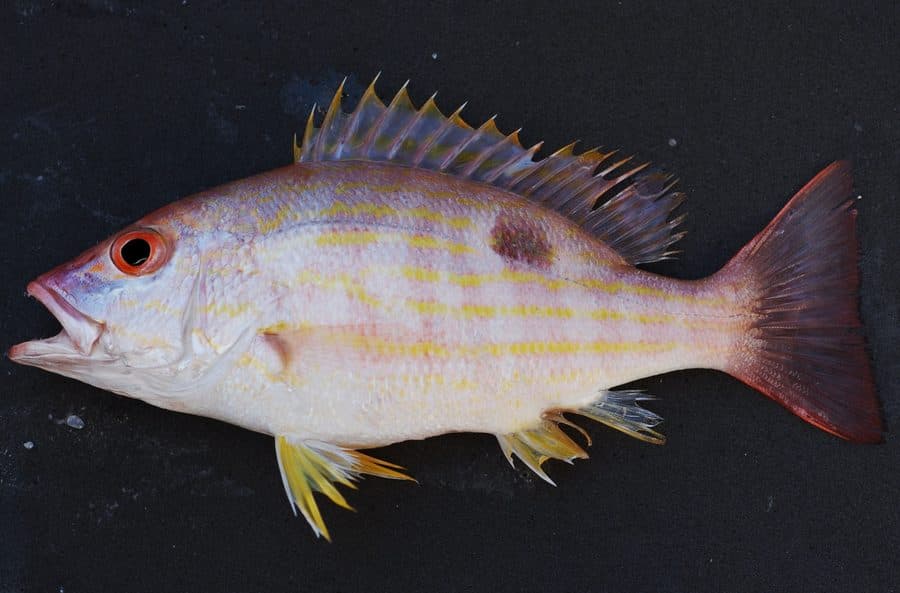
Lane Snapper
Lutjanus synagris
A colorful, cooperative reef snapper with yellow side stripes and a shoulder spot; one of the friendliest bottom-fishing targets for new saltwater anglers.
Lane snapper are a forgiving reef target: fish small baits on light bottom rigs around live bottom and stay mobile until you find the mixed reef bite.
Quick Catch Plan
ID Characteristics
Use these field marks and context clues to separate lane snapper from similar fish before logging or keeping one.
- Overall look: A colorful, cooperative reef snapper with yellow side stripes and a shoulder spot; one of the friendliest bottom-fishing targets for new saltwater anglers.
- Typical size: 0.5-2 lb; trophy class: 4 lb+.
- Most likely setting: reef, nearshore, offshore, inshore, grass flats in Gulf Coast, Florida, Southeast, Atlantic Coast.
- Where to confirm it: Mixed bottom, small reef fish marks, and steady pecks from grunts/porgies.
- Compared with Yellowtail snapper: Lane snapper have yellow horizontal stripes and a dark side spot; yellowtails have a bright yellow tail and midline without the shoulder spot.
Gear Recommendations
- Rod
- 7' medium spinning
- Reel
- 2500-4000 spinning
- Main line
- 10-20 lb braid
- Leader
- 15-25 lb fluorocarbon
- Hooks
- #1-1/0 small circle or J hooks
- Jigheads
- 1/8-1/2 oz shrimp-tipped jigheads
- Terminal tackle
- Chicken rigs, knocker rigs, small bank sinkers
- Lure sizes
- Small shrimp/squid pieces; 1-3" jigs
- Lure colors
- Natural, pink, white
- Baits
- Shrimp · Squid · Cut sardine · Fish bites
Simple start: 7' medium spinning, 2500-4000 spinning, 15-25 lb fluorocarbon, and Small shrimp or squid strip on a #1-1/0 hook with light weight.. Fish the easiest public structure first and keep the bait natural.
One versatile spinning setup, a small hook box, fluorocarbon from 20 to 40 lb, and fresh bait cover most lane snapper trips.
Build a chum-and-flatline program: anchor up-current, start light, feed unweighted baits naturally, and adjust leader size until the larger fish commit.
Techniques
- Presentation
- Keep small bait on or just above bottom and avoid over-sizing tackle.
- Retrieve
- Reel steadily once the bite loads; they are small but quick.
- Positioning
- Drift or anchor across rubble/live bottom until bites stack up.
- Depth
- 10-120 ft
- Structure
- Patch reefs, grass edges, rubble, live bottom, and small wrecks.
- Working current
- Light to moderate current spreads scent and positions fish.
Drift or anchor patch reefs and live bottom.
Occasional around Gulf piers with reefy bottom.
A good nearshore patch-reef target on calm days.
Timing & Conditions
- Seasons
- Year-round in warm regions.
- Time of day
- Daytime is fine; low light can improve shallower bites.
- Weather
- Calm enough to hold bottom.
- Wind
- Light to moderate.
- Water temp
- Best 68-84°F.
- Tides
- Moving tide.
- Moon
- Minor.
- Pressure
- Minor.
- Seasonal movement
- Local reef and grass-flat movements.
Habitat — Where to Find Them
Warm patch reef, live-bottom, rubble, and grass-edge habitat across the Gulf and South Atlantic.
- Depth range
- 10-120 ft
- Look for
- Mixed bottom, small reef fish marks, and steady pecks from grunts/porgies.
- Migration
- Mostly resident with local depth shifts.
Common Mistakes
- Hooks too large
- Baits too big
- Ignoring small live-bottom patches
- Not checking current lane-snapper seasons
- Overpowering them on heavy tackle
Catch, Handling & Release
- Landing
- Swing or net; use care with spines.
- Handling
- Ice quickly.
- Release
- Release shallow fish quickly; descend from depth if needed.
- Conservation
- Lane snapper limits and seasons vary by Gulf/Atlantic jurisdiction; verify current rules.
Common Lookalikes
Lane snapper have yellow horizontal stripes and a dark side spot; yellowtails have a bright yellow tail and midline without the shoulder spot.
Local Regulations
Size limits, bag limits, seasons, and gear rules change every year and differ by state (and often by individual water). Always verify with the official source before keeping fish.

All state sources for this species
Guide data is editorial and general — conditions, regulations, and fish behavior vary by water. Photo: Wikipedia — Lane snapper.
