Jack Crevalle
SaltwaterBeginner friendlyIn season now

Jack Crevalle

Caranx hippos

The inshore bar brawler — marauding schools that blitz bait against seawalls and beaches, eat anything moving fast, and fight beyond reason. Nobody's dinner, everybody's arm workout.

Typical size
3–15 lb
Trophy class
30 lb+
Easy-moderate

Find the commotion and throw anything loud into it, fast. Jacks reward the run-and-gun angler — when birds dive and bait sprays, drop everything and cast.

Quick Catch Plan

Best bait right now
Big walking topwater retrieved as fast as you can work it through busting fish
Recommended lure
Topwater plugs, 1 oz spoons, bucktails — speed matters more than model
Setup
7'6" MH spinning, 5000 reel, 30 lb braid to 40 lb mono leader
Where to go
Seawalls, river mouths, beaches, marina basins — wherever bait is pinned
Best time
Dawn and dusk blitzes; incoming tide pushing bait
Season notes
Spring and fall mullet runs turn beaches into jack stadiums; summer schools roam rivers and ICW.

ID Characteristics

Use these field marks and context clues to separate jack crevalle from similar fish before logging or keeping one.

  • Overall look: The inshore bar brawler — marauding schools that blitz bait against seawalls and beaches, eat anything moving fast, and fight beyond reason. Nobody's dinner, everybody's arm workout.
  • Typical size: 3–15 lb; trophy class: 30 lb+.
  • Most likely setting: inshore, beach, surf, pier, canal in Florida, Gulf Coast, Southeast, Atlantic Coast.
  • Where to confirm it: Showering bait, boiling water, diving pelicans, and that freight-train wake.
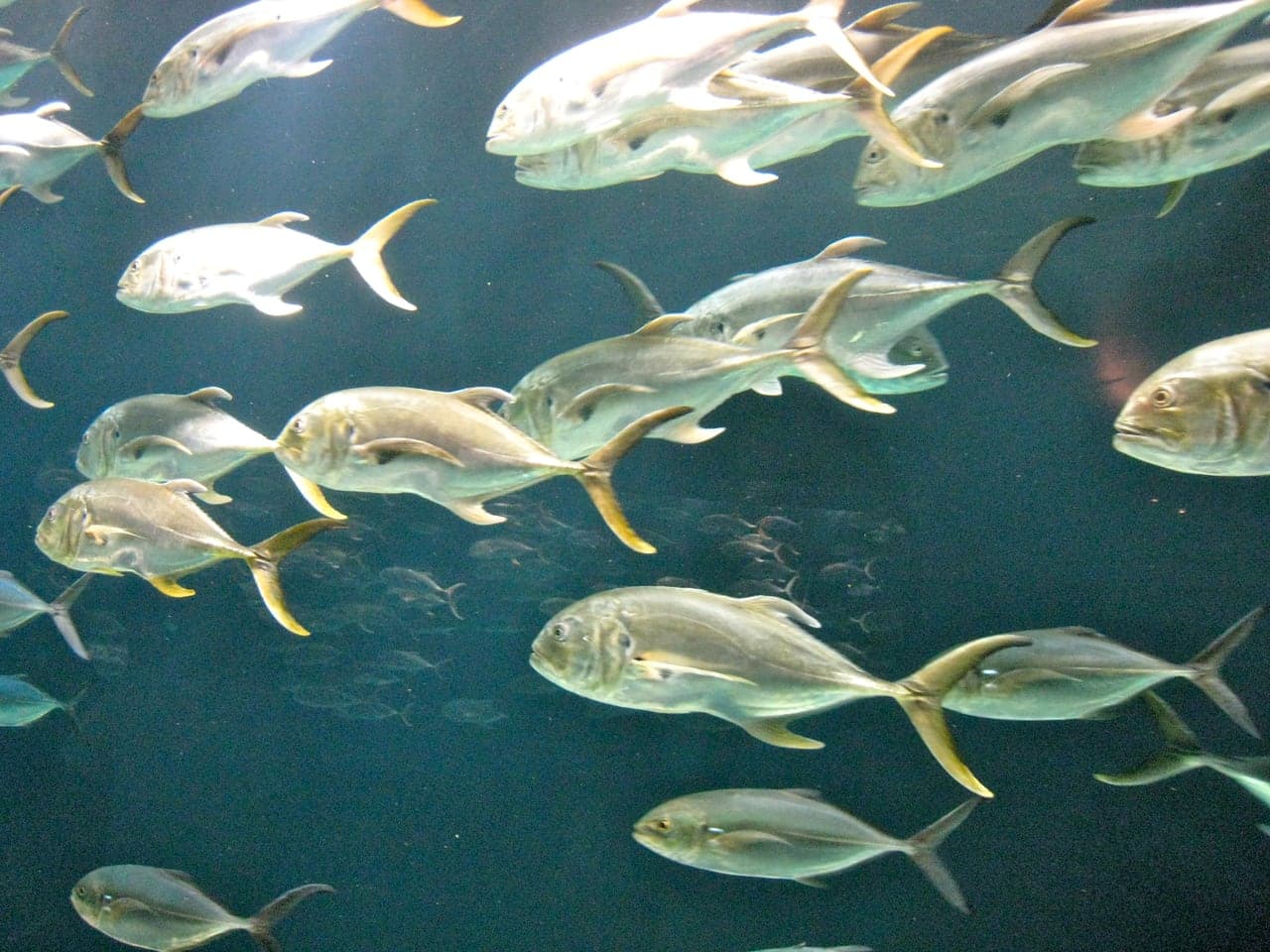
  • Compared with Blue runner: Blue runners are slimmer and smaller; crevalle have the steep blunt forehead and a black spot on the gill cover and pectoral fin.

Gear Recommendations

Rod
7'–8' MH-H fast
Reel
4000–6000 with real drag
Main line
20–40 lb braid
Leader
40 lb mono (abrasion + chafe), 24"
Hooks
4/0–6/0 for live baits; consider single-hook conversions on plugs (easier releases)
Jigheads
1/2–1.5 oz bucktails
Terminal tackle
Heavy snaps ok; jacks aren't leader-shy when feeding
Lure sizes
4–7"
Lure colors
Chrome, white, chartreuse — visibility and commotion
Baits
Live mullet · Live pilchards · Fresh cut anything when schools are deep
Beginner setup

MH combo + one big topwater. Walk a seawall at dawn until you see nervous water.

Budget setup

Add a heavy spoon for distance when fish bust beyond plug range.

Serious angler

8' rods for shore-based distance, a 10-wt fly rod for the poppers-into-blitz experience of a lifetime.

Techniques

Presentation
Cast beyond the school, retrieve through it at maximum speed. Hooked jacks keep the school with you — leave it in the water while a buddy casts.
Retrieve
As fast as your reel allows; jacks time out on slow lures.
Positioning
Get ahead of moving schools; they travel with purpose along seawalls and beaches.
Depth
Mostly surface to 10 ft when blitzing; deeper channel schools in heat.
Structure
Seawalls, jetties, river mouths, marina basins, beach troughs — anywhere bait gets cornered.
Working current
Moving tide moves bait; jacks follow the conveyor.
boat fishing

Run-and-gun the blitzes; watch for slicks and birds.

pier fishing

Cast spoons past the breakers when schools push through.

surf fishing

Mullet-run mayhem every fall.

kayak fishing

Hold on — a 20 lb jack tows a kayak in circles ('the sleigh ride').

shore fishing

Among the best big-fish-from-shore options in America — seawalls and spillways.

Timing & Conditions

Seasons
Warm months everywhere; year-round south FL; the fall mullet run is the spectacle.
Time of day
Dawn/dusk peak; midday schools still commit if bait is pinned.
Weather
Any weather they can find bait in — jacks aren't delicate.
Wind
Onshore wind pins bait against structure = jack buffet.
Water temp
Active 68–90°F.
Tides
Incoming along beaches/walls; outgoing at river mouths.
Pressure
Largely indifferent — bless them.
Seasonal movement
Schools patrol daily circuits; seasonal north-south and inshore-offshore shifts with temperature.

Habitat — Where to Find Them

Everywhere warm salt: beaches, bays, rivers (they run far into freshwater), and offshore weedlines (big loners).

Depth range
1–30 ft typical inshore.
Look for
Showering bait, boiling water, diving pelicans, and that freight-train wake.
Migration
Temperature-driven coastal movement; residents in FL.
seawallsriver mouthsjettiesbasinstroughs

Common Mistakes

  • Retrieving too slow — impossible-sounding but true: you can't reel faster than a jack
  • Light tackle heroics that leave fish over-exhausted
  • Chasing a school by driving through it
  • No pliers for the treble-hook rodeo boatside
  • Dismissing them as 'trash' — pound for pound the hardest puller inshore

Catch, Handling & Release

Landing
Lip-grip tool or tail-grab; mind the scutes near the tail.
Handling
Sturdy fish but long fights = lactic acid; handle fast.
Release
Revive thoroughly — swim them boat-side until they surge off. Almost everyone releases jacks.
Conservation
Few limits (not a food fishery) — but check local rules; FL has no bag limit currently.

Common Lookalikes

Blue runner

Blue runners are slimmer and smaller; crevalle have the steep blunt forehead and a black spot on the gill cover and pectoral fin.

Guide data is editorial and general — conditions, regulations, and fish behavior vary by water. Photo: Wikipedia — Crevalle jack.