Hogfish
Lachnolaimus maximus
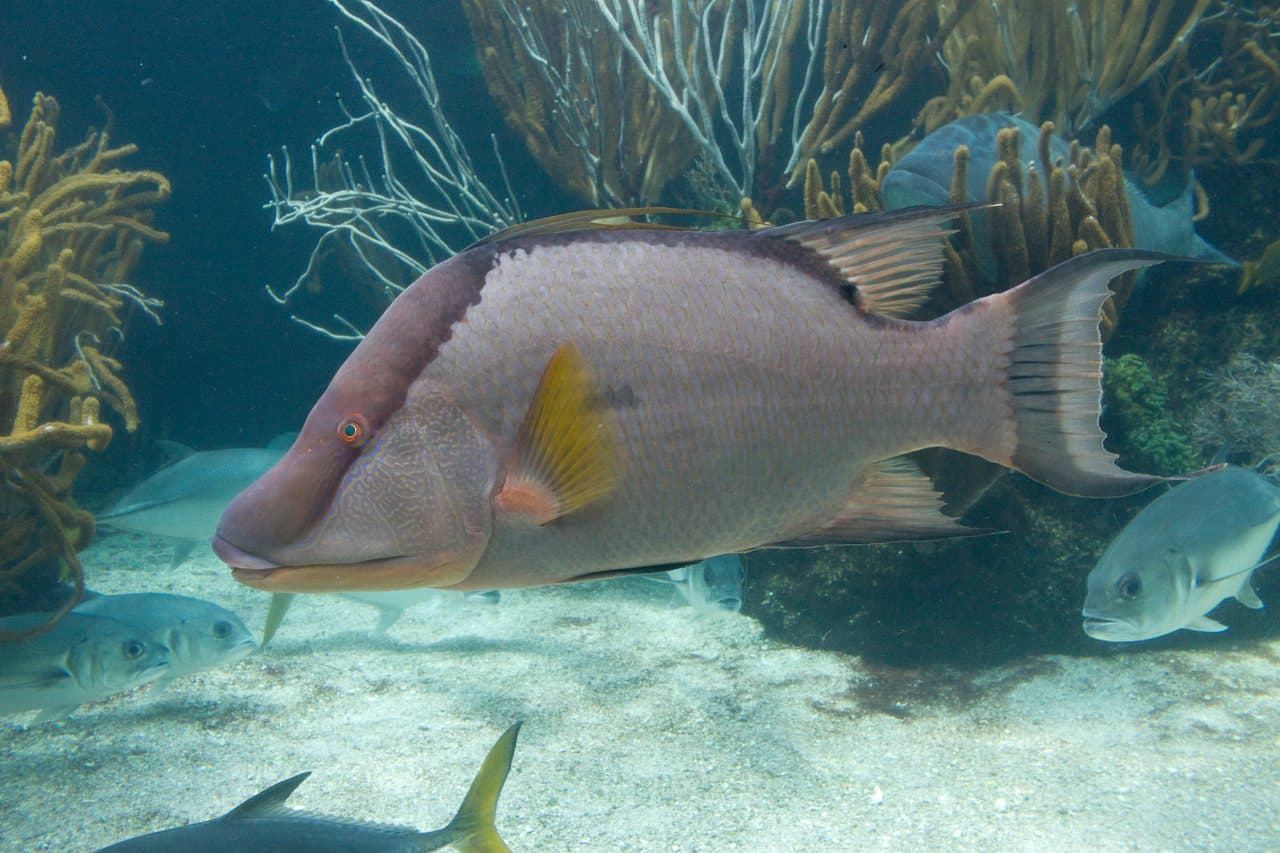
The reef's most sought-after table fish — a big, color-shifting wrasse with a pig-like snout it uses to root crustaceans out of the bottom. Famous eating, famously tricky on hook-and-line, and a premier spearfishing target off Florida.
Anchor over live-bottom or reef, put a small hook and a live shrimp right on the sand next to the structure, and fish light fluoro with a soft touch — hogfish nibble and root rather than smash. Many are also taken by divers spearfishing the reefs.
Quick Catch Plan
ID Characteristics
Use these field marks and context clues to separate hogfish from similar fish before logging or keeping one.
- Overall look: The reef's most sought-after table fish — a big, color-shifting wrasse with a pig-like snout it uses to root crustaceans out of the bottom. Famous eating, famously tricky on hook-and-line, and a premier spearfishing target off Florida.
- Typical size: 1–5 lb; trophy class: 10 lb+ ('hog').
- Most likely setting: reef, wreck, nearshore, inshore, offshore in Florida, Gulf Coast, Southeast, Atlantic Coast.
- Where to confirm it: Reef edges with adjacent sand, scattered rubble, and bait/crustacean sign.
- Compared with Other wrasses/porgies: The long pig-like snout plus the first three elongated dorsal spines are unique; large males show a dark 'saddle' and long snout, females/juveniles are mottled pale-to-reddish.
- Compared with Spanish/other 'hogfish' wrasses: True hogfish (Lachnolaimus maximus) is deep-bodied with the trailing dorsal filaments; the smaller Spanish hogfish is elongate with a yellow/purple split body.
Gear Recommendations
- Rod
- 7' medium fast spinning with a sensitive tip
- Reel
- 2500–4000 spinning
- Main line
- 10–20 lb braid
- Leader
- 15–20 lb fluorocarbon (drop to 12 when picky)
- Hooks
- #1–1/0 short-shank J or light circle (small mouths)
- Jigheads
- 1/8–3/8 oz jighead tipped with shrimp works well
- Terminal tackle
- Knocker rig or a light jighead; minimal weight to keep bait on the sand
- Lure sizes
- n/a
- Lure colors
- Natural; scent/bait is what matters
- Baits
- Live shrimp · Fresh dead shrimp · Small crabs · Cut squid
Get on a Florida reef party/charter boat with fresh shrimp — they'll put you over live-bottom.
A light inshore combo, a bag of shrimp, and a small box of #1 hooks and split shot.
Anchor precisely on live-bottom with the sounder, chum the reef lightly, and fish the lightest fluoro you can get away with — or take up spearfishing the reefs where legal.
Techniques
- Presentation
- Bait flat on the sand at the base of structure; let it sit and feed line on the soft, rooting bite. A jighead-and-shrimp fished slowly on the bottom is deadly.
- Retrieve
- Barely any — dead-stick the shrimp and set on weight, not on the first nibbles.
- Positioning
- Anchor up-current so bait and chum drift naturally across the live-bottom.
- Depth
- 20–120 ft, commonly 30–90 ft on Florida reefs.
- Structure
- Live-bottom, coral/rock ledges, rubble, and wrecks.
- Working current
- Light-to-moderate current gets them feeding and carries scent.
The standard — anchor and bottom-fish shrimp over reef and live-bottom.
Workable over nearshore Florida reefs and live-bottom in calm conditions.
Timing & Conditions
- Seasons
- Year-round on Florida reefs; often a bit shallower in cooler months on the Gulf.
- Time of day
- Daytime — they're visual bottom-feeders.
- Weather
- Calmer seas make anchoring and bite detection much easier.
- Wind
- Light wind for boat control over structure.
- Water temp
- Comfortable across a wide reef range; ~68–82°F typical.
- Tides
- Moving current triggers feeding; slack often slows it.
- Moon
- Minor.
- Pressure
- Minor.
- Seasonal movement
- Reef-resident; shifts depth seasonally rather than migrating.
Habitat — Where to Find Them
Warm reef and hard-bottom of Florida, the Gulf, and the South Atlantic — sand patches beside coral, rock, rubble, and ledges where they root for crabs, urchins, and mollusks.
- Depth range
- 10–130 ft; most rod-and-reel effort 20–90 ft.
- Look for
- Reef edges with adjacent sand, scattered rubble, and bait/crustacean sign.
- Migration
- Resident on reef systems with seasonal depth shifts.
Common Mistakes
- Hook and leader too heavy — hogfish inspect and nibble in clear water
- Setting the hook on the first taps instead of waiting for weight
- Fishing off the sand — the bait needs to be on the bottom where they root
- Ignoring the strict Florida size and season rules (they vary Gulf vs Atlantic)
- No current — a slack tide over the reef is tough
Catch, Handling & Release
- Landing
- Net or swing; handle gently — smaller mouths and no cutting teeth to worry about.
- Handling
- Ice quickly; hogfish is prized, delicate white meat.
- Release
- Reef fish from deeper water can suffer barotrauma — vent or use a descending device for releases from depth.
- Conservation
- Florida hogfish rules are strict and differ by coast: on the Gulf/Keys a 16" fork-length minimum with a small daily bag, and the Atlantic side carries a larger minimum plus a seasonal closure. Always confirm current FWC/state regulations before keeping one.
Common Lookalikes
The long pig-like snout plus the first three elongated dorsal spines are unique; large males show a dark 'saddle' and long snout, females/juveniles are mottled pale-to-reddish.
True hogfish (Lachnolaimus maximus) is deep-bodied with the trailing dorsal filaments; the smaller Spanish hogfish is elongate with a yellow/purple split body.
Local Regulations
Size limits, bag limits, seasons, and gear rules change every year and differ by state (and often by individual water). Always verify with the official source before keeping fish.

All state sources for this species
Guide data is editorial and general — conditions, regulations, and fish behavior vary by water. Photo: Wikipedia — Hogfish.
