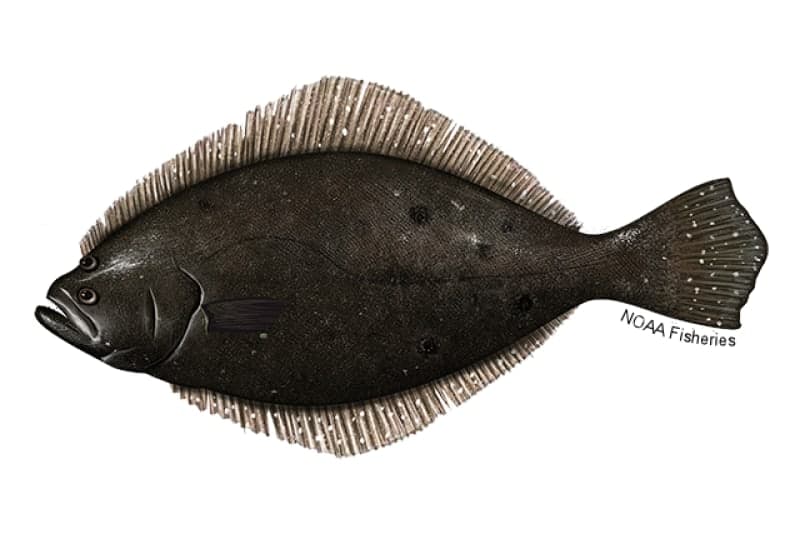
Flounder (Southern & Summer)
Paralichthys lethostigma / dentatus
The ambush flatfish — buried at bottom transitions waiting to inhale anything swimming by. Slow drags, patient hooksets, and a legendary dinner plate at the end.
Drag bait or a jig SLOWLY across bottom transitions — creek mouths, drop-offs, structure edges. Feel the thump, wait three seconds, then sweep. Fall run is the season.
Quick Catch Plan
ID Characteristics
Use these field marks and context clues to separate flounder (southern & summer) from similar fish before logging or keeping one.
- Overall look: The ambush flatfish — buried at bottom transitions waiting to inhale anything swimming by. Slow drags, patient hooksets, and a legendary dinner plate at the end.
- Typical size: 14–18 in; trophy class: 20 in+ / 5 lb+ ('doormats').
- Most likely setting: inshore, pier, surf, marsh, jetty in Gulf Coast, Atlantic Coast, Southeast, Northeast, Florida.
- Where to confirm it: Anywhere moving water squeezes bait over a bottom change.
- Compared with Southern vs summer flounder: Summer flounder (fluke) have 5 ocellated spots arranged in an X near the tail; southern flounder lack ocellated spots.
Gear Recommendations
- Rod
- 6'10"–7'2" M fast (sensitive tip, strong butt)
- Reel
- 2500–4000
- Main line
- 10–20 lb braid
- Leader
- 20 lb fluorocarbon, 18–24"
- Hooks
- #1–2/0 kahle or wide-gap for live bait
- Jigheads
- 1/4–3/4 oz (deeper = heavier; stay vertical-ish)
- Terminal tackle
- Carolina rigs with 1/2–1 oz egg sinkers; fluke rigs with spinner blades up north
- Lure sizes
- 3–5" soft baits
- Lure colors
- White, chartreuse, pink, nuclear chicken (Gulp)
- Baits
- Mud minnows (killifish) · Finger mullet · Live shrimp · Strip baits (cut from the first flounder's belly — old trick, check legality)
7' M combo, jighead + Gulp, drag it slow along any drain mouth on falling tide.
Add a Carolina-rig kit and a minnow trap for free bait.
Northern fluke: drift boat with bucktail/teaser tandems matched to drift speed; Southern: gigging rig (where legal) or dedicated jetty program.
Techniques
- Presentation
- Bottom contact at all times. Drag-hop 6 inches at a time; flounder strike from below and behind.
- Retrieve
- The slowest in saltwater. Feel weight? Drop the tip, count to three, sweep hard.
- Positioning
- Cast up-current, work bait down-current past the ambush edge.
- Depth
- 2–15 ft inshore; 20–60 ft nearshore reefs (big fish late fall).
- Structure
- Drain mouths, channel edges, pilings, jetty rock-sand seams, surf trough edges.
- Working current
- Flounder lie down-current of structure facing the flow — cast where food arrives from.
Drift channels dragging bucktails; the drift covers the transition line for you.
Fish the pilings' down-current sides with live minnows on Carolina rigs.
Work jetty pockets and the deeper corner of the first gut.
Drift-drag with the tide through passes and channels.
Creek mouths on foot at falling tide are prime — small water, big results.
Timing & Conditions
- Seasons
- Fall run (Oct–Dec) peak; solid spring–summer; offshore winter spawn empties the bays.
- Time of day
- Tide matters more than sun; daylight fishing is genuinely good.
- Weather
- Stable; clear water helps them see the bait.
- Wind
- Manageable — bottom fishing forgives chop better than sight games.
- Water temp
- Active 58–80°F.
- Tides
- Falling tide at any funnel is the flounder appointment.
- Moon
- Stronger tides move more bait through the funnels.
- Pressure
- Modest effect; feeding is tide-scheduled.
- Seasonal movement
- Bays in warm months → mass fall migration through passes → offshore spawn → return in spring.
Habitat — Where to Find Them
Every estuary from Massachusetts to Texas; southern flounder rule the Gulf, summer flounder (fluke) the mid-Atlantic.
- Depth range
- 2–60 ft seasonally.
- Look for
- Anywhere moving water squeezes bait over a bottom change.
- Migration
- Classic inshore-offshore annual cycle keyed to fall cooling.
Common Mistakes
- Setting the hook instantly — flounder reposition the bait first; wait
- Fishing too fast and off-bottom
- Skipping tiny drains that 'look too small'
- Weak sweeps with circle-style timing — flounder need a real hookset after the pause
- Missing closed seasons/limits — flounder regs tightened everywhere recently
Catch, Handling & Release
- Landing
- Net every keeper — flounder wake up boatside and the head-shake throws jigs.
- Handling
- Grip across the back; watch the toothy jaws.
- Release
- Hardy; flat fish handle release well. Vent-free, quick returns.
- Conservation
- Tight and changing: TX fall closure, size minimums everywhere, NC near-moratorium — verify every season.
Common Lookalikes
Summer flounder (fluke) have 5 ocellated spots arranged in an X near the tail; southern flounder lack ocellated spots.
Local Regulations
Size limits, bag limits, seasons, and gear rules change every year and differ by state (and often by individual water). Always verify with the official source before keeping fish.

All state sources for this species
Guide data is editorial and general — conditions, regulations, and fish behavior vary by water. Photo: NOAA Fisheries.
