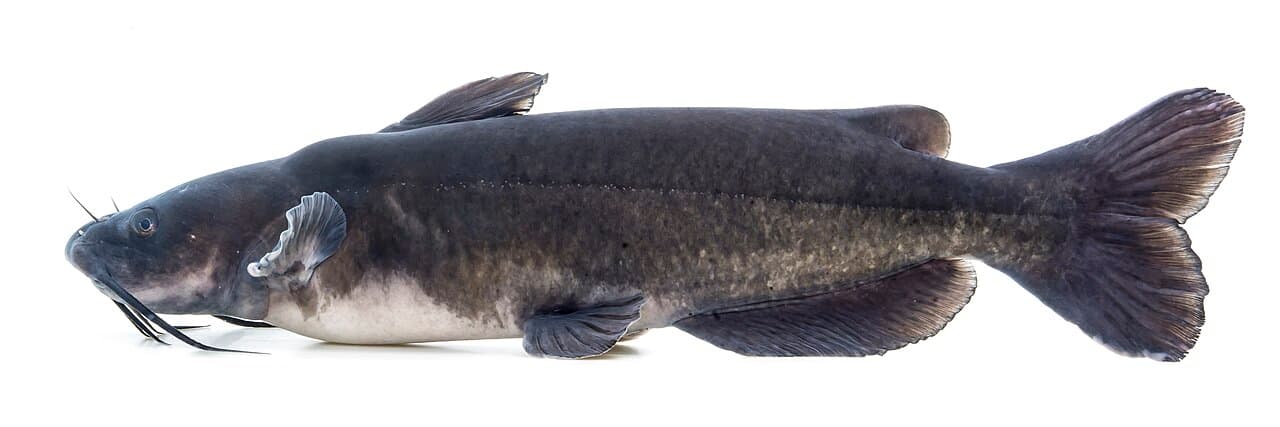
Ictalurus punctatus
The most widespread catfish in America and one of the easiest quality fish to catch — a whiskered scavenger-predator that finds baits by smell in any water clarity.
Put a smelly bait on bottom near a depth change or current break, keep the rod loaded, and wait — rarely long. Perfect first fish for kids and the best 'relax on the bank' fishing there is.
Use these field marks and context clues to separate channel catfish from similar fish before logging or keeping one.
Guide data is editorial and general — conditions, regulations, and fish behavior vary by water. Photo: Wikipedia — Channel catfish.
Match a rig to Channel Catfish with the Setup Builder, or browse all setups.
Anchor upstream of a hole and fan baits into it.
Lakeside piers over 8 ft+ of water produce all summer at night.
Great for reaching river holes; anchor carefully in current.
The classic: two rods in holders on a bend or pond dam at dusk.
Rivers, reservoirs, ponds, creeks — stocked and native nearly everywhere in the lower 48.
Channels have a rounded anal fin (24–29 rays) and often spots; blues have a straight-edged anal fin (30+ rays) and no spots.
Flatheads have a flat head, protruding lower jaw, and squared tail — channels have a deeply forked tail.
Size limits, bag limits, seasons, and gear rules change every year and differ by state (and often by individual water). Always verify with the official source before keeping fish.