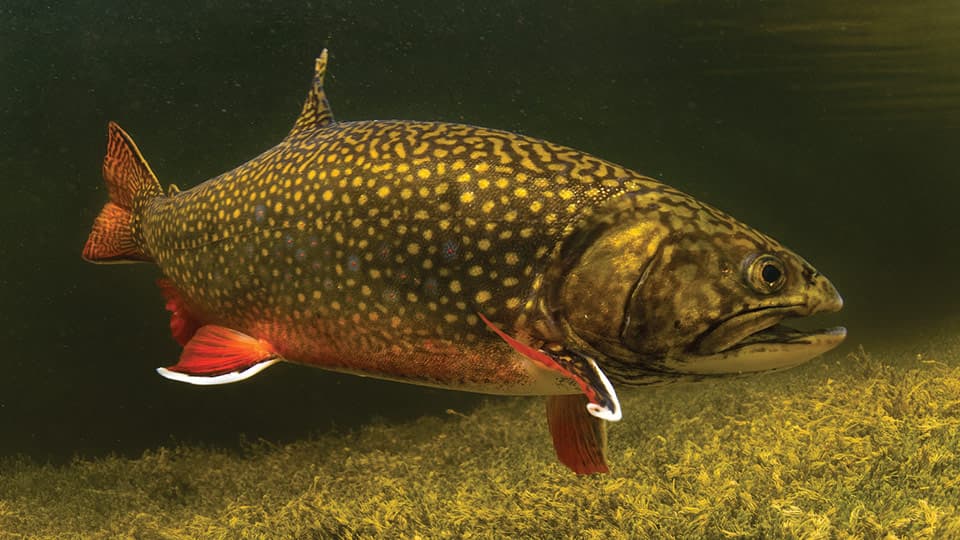
Brook Trout
FreshwaterBeginner friendlyIn season now

Brook Trout

Salvelinus fontinalis

The native jewel of eastern mountain streams — technically a char, absurdly beautiful, and eager to eat. Wild brookies live in the smallest, coldest, cleanest water on the map.

Typical size
5–10 in (wild); 10–14 in stocked
Trophy class
14 in+ wild is exceptional; 3 lb+ in northern lakes
Easy-moderate

Hike upstream, stay hidden, and drop anything small and buggy into pocket water. Brook trout fishing is more about the approach than the offering.

Quick Catch Plan

Best bait right now
Garden worm on a #10 hook flipped into plunge pools, or a #14 dry fly
Recommended lure
1/32–1/16 oz inline spinner, size 12–16 dry flies
Setup
5'–6' ultralight, 1000 reel, 4 lb mono (or a 7'6" 3-wt fly rod)
Where to go
Headwater creeks, beaver ponds, spring-fed mountain streams
Best time
Any daylight in spring/fall; early morning in summer
Season notes
Post-runoff spring is peak; fall fish wear spectacular spawning colors (handle with extra care).

ID Characteristics

Use these field marks and context clues to separate brook trout from similar fish before logging or keeping one.

  • Overall look: The native jewel of eastern mountain streams — technically a char, absurdly beautiful, and eager to eat. Wild brookies live in the smallest, coldest, cleanest water on the map.
  • Typical size: 5–10 in (wild); 10–14 in stocked; trophy class: 14 in+ wild is exceptional; 3 lb+ in northern lakes.
  • Most likely setting: creek, river, lake, pond in Northeast, Southeast, Midwest.
  • Where to confirm it: Blue lines on the map above the stocked sections, with cold tributaries.
  • Compared with Brown trout: Brookies show light spots on a dark back with worm-track marbling and white-edged orange fins.

Gear Recommendations

Rod
Short ultralight spinning or 2–4 wt fly rod
Reel
1000 spinning
Main line
2–4 lb mono
Leader
4x–6x tippet on the fly rod
Hooks
#10–#12 baitholders
Jigheads
1/64–1/32 oz micro jigs
Terminal tackle
A single small split shot at most
Lure sizes
The smallest spinners made
Lure colors
Gold, brook trout pattern, black/yellow
Baits
Garden worms · Crickets · Grubs found streamside
Beginner setup

Ultralight + worms + sneakers you don't mind soaking. That's it.

Budget setup

Add a card of #0 spinners.

Serious angler

A 6'6" 3-wt fly rod, a box of attractor dries (Royal Wulff, Stimulator), and a topo map of blue lines.

Techniques

Presentation
Flip or dap into pockets — casts are 10–20 ft. First drift usually gets the fish if you weren't seen.
Retrieve
Barely any; let current do it. Spinners: just fast enough to spin.
Positioning
Always fish upstream — brookies face away from you. Kneel, use boulders as blinds.
Depth
1–4 ft pockets and plunge pools.
Structure
Plunge pools, log steps, boulder pockets, beaver dams, undercut roots.
Working current
Every soft pocket in fast water holds a fish in good brookie country.
shore fishing

This is a wading/hiking game exclusively — the farther from the road, the better the fishing.

Timing & Conditions

Seasons
Late spring through fall; high summer pushes them to spring seeps.
Time of day
All day in shaded creeks; hatches at dusk.
Weather
Overcast drizzle is perfect; brookies feed through light rain.
Wind
Sheltered creeks make wind irrelevant.
Water temp
Need cold: 45–62°F, stressed above 65°F.
Seasonal movement
Upstream in warming summer, congregating at cold tributary mouths and springs.

Habitat — Where to Find Them

High-gradient Appalachian streams, northern New England and Great Lakes creeks, Maine ponds — clean, cold, oxygen-rich water only.

Depth range
1–6 ft.
Look for
Blue lines on the map above the stocked sections, with cold tributaries.
Migration
Local, thermal: upstream and to seeps in heat, downstream in fall/winter.
plunge poolsboulderslog damsbeaver pondsspring seeps

Common Mistakes

  • Being seen — 90% of blank days are stealth failures
  • Oversized hooks and baits for a fish with a tiny mouth
  • Fishing downstream, showing every fish your silhouette
  • Skipping tiny pockets that 'look too small' — they hold the best fish
  • Keeping wild natives; most are irreplaceable

Catch, Handling & Release

Landing
Small net or wet hand; they exhaust fast.
Handling
Seconds only — small fish in warm months die from long photo sessions.
Release
Wild native brookies deserve full release; stocked ponds are for the pan.
Conservation
Many Appalachian states protect wild brook trout with special sections and reduced limits.

Common Lookalikes

Brown trout

Brookies show light spots on a dark back with worm-track marbling and white-edged orange fins.

Guide data is editorial and general — conditions, regulations, and fish behavior vary by water. Photo: Wikipedia — Brook trout.