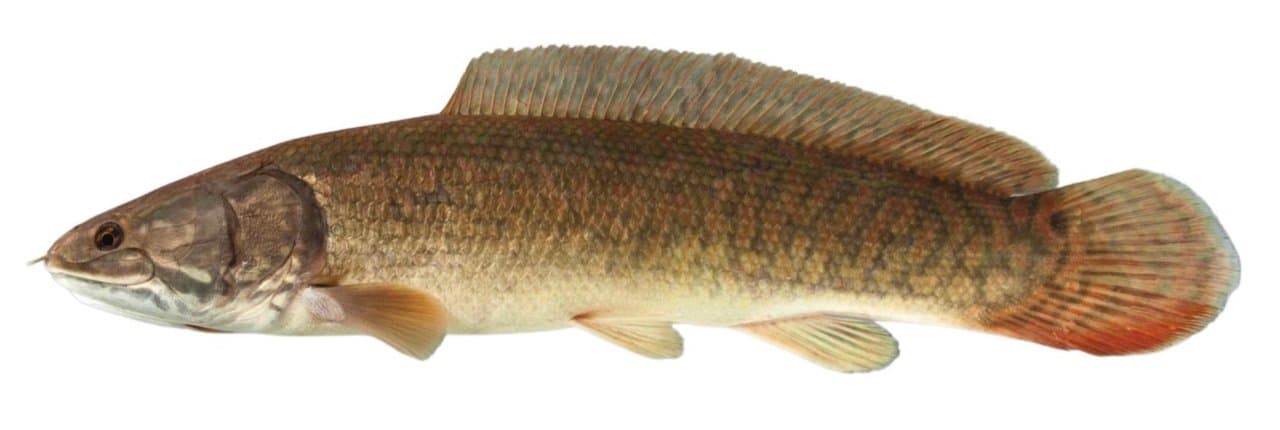
Bowfin
FreshwaterBeginner friendlyIn season now

Bowfin

Amia calva

A living fossil with an attitude problem. Bowfin have been ambushing prey in North American backwaters for 150 million years, breathe air when the water goes stale, and fight like they resent you personally. Long dismissed as a 'trash fish,' they've earned a serious cult following among anglers who like violence on the end of the line.

Typical size
2–5 lb
Trophy class
8+ lb; double digits are giants
Easy-moderate

Bowfin own the water everyone else skips: warm, weedy, half-stagnant backwaters, oxbows, and canals. They ambush anything that moves, hit like a snake strike, and go absolutely feral at the boat. Heavy leader, strong hooks, and long pliers are not optional. Native fish, by the way — not an invasive — and an increasingly respected sportfish.

Quick Catch Plan

Best bait right now
Fresh cut bait or a lively minnow under a float near weed edges
Recommended lure
Dark creature bait, swimbait, or chatterbait worked slow
Setup
Medium-heavy 3000–4000 spinning, 30–50 lb braid, 40–50 lb mono leader
Where to go
Weedy backwater, oxbow, canal, or marsh edge with soft bottom
Best time
Warm afternoons; watch for fish rolling and gulping air
Season notes
Late spring and summer in the shallows is prime; males guard fry in spring and defend against anything nearby.

ID Characteristics

Use these field marks and context clues to separate bowfin from similar fish before logging or keeping one.

  • Long, cylindrical olive-bronze body with soft camo mottling
  • Single dorsal fin running more than half the body length
  • Bony armored head with a mouth full of small sharp teeth
  • Males show a black eyespot ringed in orange at the tail base
  • Overall look: A living fossil with an attitude problem. Bowfin have been ambushing prey in North American backwaters for 150 million years, breathe air when the water goes stale, and fight like they resent you personally. Long dismissed as a 'trash fish,' they've earned a serious cult following among anglers who like violence on the end of the line.
  • Typical size: 2–5 lb; trophy class: 8+ lb; double digits are giants.
  • Most likely setting: lake, pond, river, creek, canal in Southeast, Florida, Midwest, Northeast, South Central.
  • Where to confirm it: Fish rolling or gulping air on warm afternoons; V-wakes pushing through shallow cover.
  • Compared with Northern snakehead: The give-away is the anal fin: long on a snakehead, short on a bowfin. Bowfin also have a bony gular plate under the jaw, and males wear an orange-ringed eyespot at the tail.
  • Compared with Burbot: Burbot have a single chin barbel and two dorsal fins; bowfin have one long continuous dorsal and no barbel.

Gear Recommendations

Rod
7' medium-heavy fast-action spinning or casting rod
Reel
3000–4000 spinning or a sturdy baitcaster
Main line
30–50 lb braid
Leader
40–50 lb mono or fluorocarbon — teeth plus a death-roll shred light leaders
Hooks
2/0–4/0 strong-wire; they crush hooks that big bass gear tolerates
Terminal tackle
Simple float rig or bottom rig for bait; single strong hooks beat trebles for release
Lure sizes
3–5" soft plastics and bladed jigs
Lure colors
Black, junebug, dark green pumpkin — dark profiles in stained water
Baits
Fresh cut shad or sucker · Live minnows · Nightcrawler gobs · Crawfish

Complete setups

Build a Bowfin setup

Match a rig to Bowfin with the Setup Builder, or browse all setups.

Techniques

Presentation
Slow everything down. Drag or hop dark plastics along the bottom near cover, or soak cut bait where you've seen fish roll. Strikes are sudden and vicious.
Retrieve
Painfully slow with pauses for lures. When a fish eats bait, give it a beat to get the hook in its mouth, then set hard — their mouths are bone.
Positioning
Work the edges: weedline seams, laydowns, canal intersections, and the backs of sloughs. Casting to rolling fish is the closest freshwater gets to sight-casting redfish.
Depth
1–8 ft; they live shallow
Structure
Vegetation edges, laydowns, undercut banks, canal culverts, backwater sloughs
boat fishing

Idle the backwaters and oxbows off the main river; fish the thickest cover the trolling motor tolerates.

kayak fishing

The kayak advantage is real: slide into stagnant backwaters big boats can't reach and sight-fish rollers.

shore fishing

Canal banks and marsh edges are perfect bowfin water — fish cut bait tight to cover and keep your drag set.

Timing & Conditions

Seasons
Late spring through early fall; peak aggression in the heat of summer when other fish sulk.
Time of day
Midday warmth is genuinely good — the opposite of most freshwater fishing.
Weather
Warm and stable; post-rain stained water doesn't bother them at all.
Wind
Calm days make spotting rolling fish far easier.
Water temp
70–88°F prime; they thrive in warm low-oxygen water that pushes other predators out.
Seasonal movement
Resident in their backwaters year-round; deeper holes in winter, shallow cover the rest of the year.

Habitat — Where to Find Them

Swamps, oxbows, sloughs, canals, and weedy lake margins — warm, slow, dark water with heavy cover. Their air-breathing swim bladder lets them own water too stagnant for the competition.

Depth range
1–8 ft typical
Look for
Fish rolling or gulping air on warm afternoons; V-wakes pushing through shallow cover.
Migration
None to speak of — find good backwater and the fish live there.
Weed bedsLaydowns and timberUndercut banksCanal systemsMarsh drains

Common Mistakes

  • Light bass leaders — teeth plus the death-roll equal instant break-offs
  • Soft hooksets: their mouths are armor, so set like you mean it
  • Grabbing one like a bass — use a lip grip and long pliers
  • Writing them off as a trash fish; they're a native predator and a blast on proper tackle
  • Fishing fast; bowfin water rewards slow, deliberate presentations

Catch, Handling & Release

Landing
Net or firm lip grip. Expect thrashing and a signature alligator death-roll at the bank.
Handling
They're slimy, muscular, and toothy — lip grip, long pliers for hook removal, and keep fingers clear of the mouth.
Release
Extremely hardy thanks to air breathing, but still support the fish and release promptly. Never kill them as 'trash' — they're native and ecologically important.
Conservation
Lightly regulated in most states, but a few have limits. Don't confuse them with invasive snakeheads: bowfin are protected natives in some waters.

Common Lookalikes

Northern snakehead

The give-away is the anal fin: long on a snakehead, short on a bowfin. Bowfin also have a bony gular plate under the jaw, and males wear an orange-ringed eyespot at the tail.

Burbot

Burbot have a single chin barbel and two dorsal fins; bowfin have one long continuous dorsal and no barbel.

Local Regulations

Size limits, bag limits, seasons, and gear rules change every year and differ by state (and often by individual water). Always verify with the official source before keeping fish.
All state sources for this species
ALAlabama Dept. of Conservation & Natural ResourcesAKAlaska Dept. of Fish & GameAZArizona Game & Fish Dept.ARArkansas Game & Fish CommissionCACalifornia Dept. of Fish & WildlifeCOColorado Parks & WildlifeCTConnecticut DEEPDEDelaware Div. of Fish & WildlifeFLFlorida Fish & Wildlife Conservation Commission (FWC)GAGeorgia Dept. of Natural ResourcesHIHawaii Div. of Aquatic ResourcesIDIdaho Fish & GameINIndiana Dept. of Natural ResourcesKYKentucky Dept. of Fish & WildlifeMEMaine Dept. of Inland Fisheries & WildlifeMDMaryland Dept. of Natural ResourcesMIMichigan Dept. of Natural ResourcesMNMinnesota Dept. of Natural ResourcesMOMissouri Dept. of ConservationMTMontana Fish, Wildlife & ParksNENebraska Game & ParksNVNevada Dept. of WildlifeNHNew Hampshire Fish & GameNJNew Jersey Div. of Fish & WildlifeNMNew Mexico Dept. of Game & FishNYNew York Dept. of Environmental ConservationNCNC Wildlife Resources Commission / Div. of Marine FisheriesNDNorth Dakota Game & FishOHOhio Dept. of Natural ResourcesOKOklahoma Dept. of Wildlife ConservationOROregon Dept. of Fish & WildlifePAPennsylvania Fish & Boat CommissionSCSouth Carolina Dept. of Natural ResourcesSDSouth Dakota Game, Fish & ParksTNTennessee Wildlife Resources AgencyTXTexas Parks & Wildlife Dept.VTVermont Fish & WildlifeVAVirginia DWR / Marine Resources CommissionWAWashington Dept. of Fish & WildlifeWVWest Virginia Div. of Natural ResourcesWIWisconsin Dept. of Natural ResourcesWYWyoming Game & Fish Dept.ILIllinois Dept. of Natural ResourcesIAIowa Dept. of Natural ResourcesKSKansas Dept. of Wildlife & ParksLALouisiana Dept. of Wildlife & FisheriesRIRhode Island DEMUTUtah Div. of Wildlife ResourcesMSMississippi Dept. of Wildlife, Fisheries & ParksMAMassWildlife / Div. of Marine Fisheries

Guide data is editorial and general — conditions, regulations, and fish behavior vary by water. Photo: Wikipedia — Bowfin.