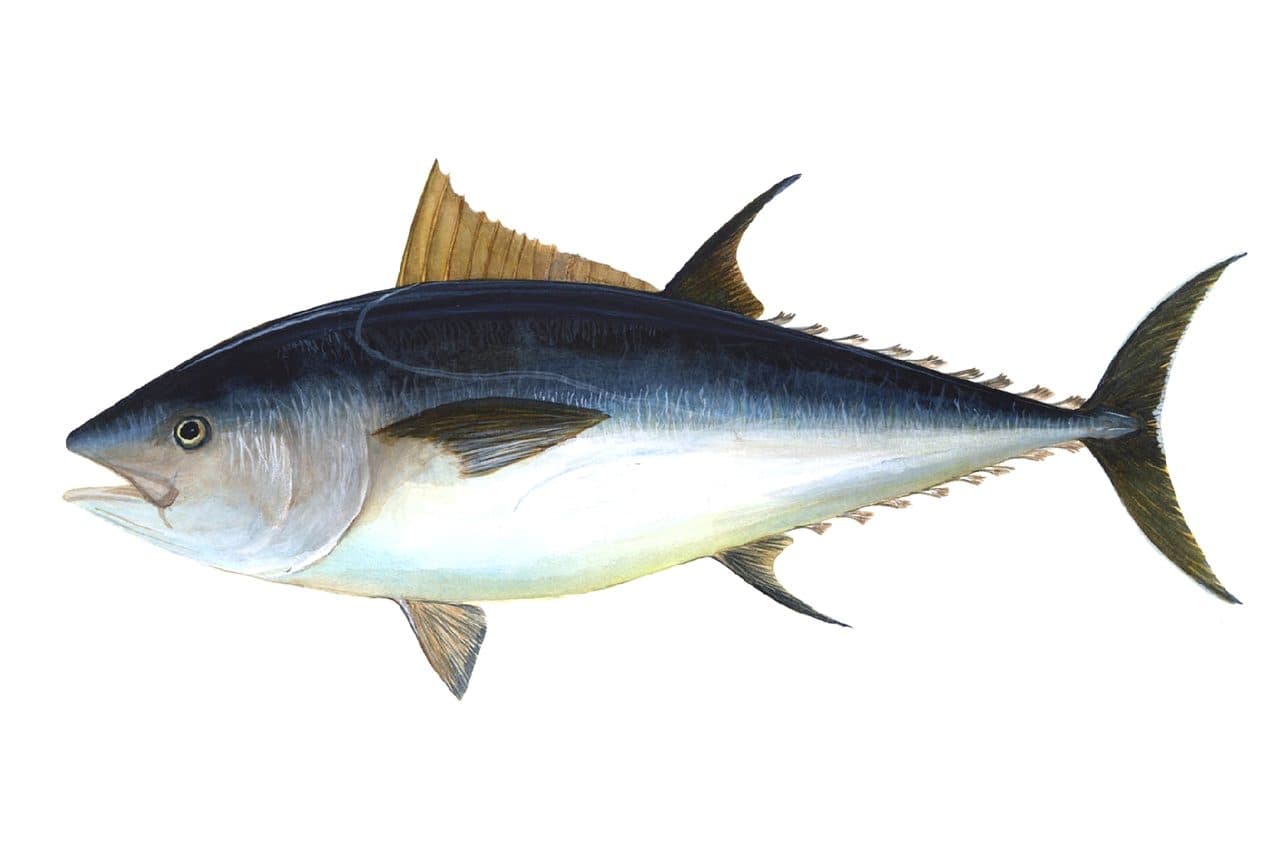
Atlantic Bluefin Tuna
Thunnus thynnus
The giant — the largest, most powerful tuna on earth, from 60 lb 'schoolies' to 1,000 lb+ 'giants' that tow boats off New England and North Carolina. The most heavily regulated fish an American angler can target.
This is big-game fishing. Chunk or jig on the bait schools, or troll heavy spreads. Every part of it — permits, tackle, gaffs, and boat — has to be scaled up. Hook a giant and you're in for a multi-hour fight.
Quick Catch Plan
ID Characteristics
Use these field marks and context clues to separate atlantic bluefin tuna from similar fish before logging or keeping one.
- Overall look: The giant — the largest, most powerful tuna on earth, from 60 lb 'schoolies' to 1,000 lb+ 'giants' that tow boats off New England and North Carolina. The most heavily regulated fish an American angler can target.
- Typical size: 60–300 lb (school–medium); trophy class: 500–1,000+ lb (giant).
- Most likely setting: offshore, nearshore in Northeast, Atlantic Coast, Southeast.
- Where to confirm it: Whales, birds, and bait (herring/sand eels/bunker); marks stacked on the sounder.
- Compared with Yellowfin tuna: Yellowfin have long yellow sickle finlets and long dorsal/anal lobes; bluefin have short pectoral fins, a stockier body, and dusky-yellow finlets edged in black.
- Compared with Bigeye tuna: Bigeye have a huge eye and rounder body; bluefin's very short pectoral fin (not reaching past the second dorsal) is the giveaway.
Gear Recommendations
- Rod
- Giants: 130 lb-class stand-up/chair. School/medium: heavy jigging or 8' popping rod
- Reel
- 50–130 wide two-speed conventional; or 20000-class spinning for jigging/casting
- Main line
- 100–200 lb braid/mono depending on class
- Leader
- 130–300 lb fluorocarbon; lighter (60–80) for shy chunk-bite school fish
- Hooks
- 9/0–16/0 circle hooks for bait; heavy assist hooks on jigs
- Jigheads
- n/a; knife jigs 200–400 g
- Terminal tackle
- Heavy wind-on leaders, quality ball-bearing swivels, crimped connections
- Lure sizes
- Spreader bars, 9"+ ballyhoo/skirts, 200–400 g jigs, big poppers/stickbaits
- Lure colors
- Green/black bars, natural ballyhoo, silver/blue jigs
- Baits
- Live/dead herring · Mackerel · Menhaden (bunker) · Butterfish (chunk)
Only via an experienced, permitted charter — this is not a DIY first-tuna fishery.
A shared charter seat on the NC winter run or a NE fall trip is the realistic entry.
Federal HMS category permit, giant-class stand-up gear, a proper anchor/chunk program, and a boat and crew ready for a hours-long fight and a huge fish.
Techniques
- Presentation
- Steady, natural chunk slick on anchor is the classic; or jig heavy metal through marks. Big fish demand flawless drags and knots.
- Retrieve
- Chunk baits drift drag-free with the slick; jigs worked fast and high; keep constant pressure once hooked.
- Positioning
- Anchor up-current of the bait/shoal and let the slick work; run-and-gun cast to surface schools.
- Depth
- Surface-busting schoolies to fish holding 100–300 ft on bait.
- Structure
- Shoals, rips, ledges, canyons, and bait concentrations (herring, sand eels, bunker).
- Working current
- Moving current builds the slick and triggers feeding windows.
A dedicated big-game boat fishery from anchor, drift, or troll.
Timing & Conditions
- Seasons
- NE: summer–fall. Mid-Atlantic: fall. North Carolina: winter (Dec–Mar).
- Time of day
- Low light and current changes; giants often bite at first light.
- Weather
- Strictly a settled-weather, offshore-capable fishery.
- Wind
- Safe seas mandatory for the boats and long fights involved.
- Water temp
- Wide tolerance; often 55–72°F on the runs, keying on bait.
- Tides
- Current flow drives the chunk bite.
- Moon
- Strong tides around the moons can improve the bite.
- Pressure
- Minor.
- Seasonal movement
- Trans-Atlantic migrator; the US sees seasonal runs as fish follow bait.
Habitat — Where to Find Them
Cool-to-temperate Atlantic waters, from nearshore shoals and rips to offshore canyons wherever bait stacks up.
- Depth range
- 60 ft nearshore banks to 600+ ft offshore.
- Look for
- Whales, birds, and bait (herring/sand eels/bunker); marks stacked on the sounder.
- Migration
- Highly migratory across the North Atlantic; strong seasonal US runs.
Common Mistakes
- Targeting bluefin without the required NOAA HMS permit and category rules understood
- Undersized tackle, gaffs, or drags for a fish this powerful
- Weak knots/crimps — one failure point ends a once-in-a-season fight
- Fishing the Gulf of Mexico for them (a spawning area — bluefin are generally no-target/no-retain there)
- Poor bleeding/chilling on a fish whose meat is extremely valuable
Catch, Handling & Release
- Landing
- Giants require multiple flying gaffs, a tail rope, and a coordinated crew.
- Handling
- Bleed and chill immediately; giants are handled for careful harvest or a well-managed release.
- Release
- Many bluefin are released — keep them in the water, minimize fight time where possible, and revive fully.
- Conservation
- Among the most regulated fish in the world: a federal Atlantic HMS permit is required, with strict size classes, category-specific quotas, and daily retention limits that change in-season. The Gulf of Mexico is a spawning zone with no-target/no-retain rules. Always confirm current NOAA HMS regulations before targeting.
Common Lookalikes
Yellowfin have long yellow sickle finlets and long dorsal/anal lobes; bluefin have short pectoral fins, a stockier body, and dusky-yellow finlets edged in black.
Bigeye have a huge eye and rounder body; bluefin's very short pectoral fin (not reaching past the second dorsal) is the giveaway.
Local Regulations
Size limits, bag limits, seasons, and gear rules change every year and differ by state (and often by individual water). Always verify with the official source before keeping fish.

All state sources for this species
Guide data is editorial and general — conditions, regulations, and fish behavior vary by water. Photo: Wikipedia — Atlantic bluefin tuna.
