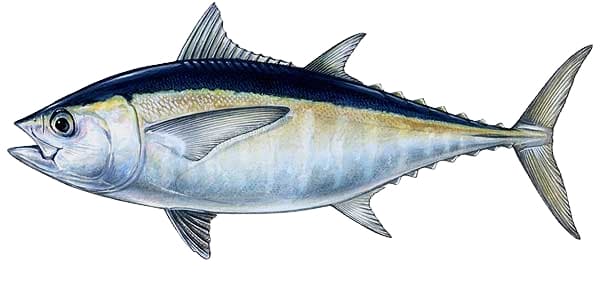
Thunnus atlanticus
The everyman's tuna — the smallest Thunnus, but pound-for-pound a screaming little freight train that comes within reach of center-consoles and even kayaks off Florida and the Gulf. The realistic 'first tuna' for most anglers.
Find diving birds or a nearshore wreck, get a chum slick going or troll small feathers, then flat-line a live cigar minnow or drop a jig. Blackfin feed in fast, chaotic windows — be ready to cast the second they show.
Guide data is editorial and general — conditions, regulations, and fish behavior vary by water. Photo: Wikipedia — Blackfin tuna.
Use these field marks and context clues to separate blackfin tuna from similar fish before logging or keeping one.
The main game — chum, troll, or jig around nearshore structure and bird schools.
Very doable off South Florida in winter when blackfin push in near the reef line — jig or slow-troll a live bait.
Warm Atlantic and Gulf waters, often surprisingly close to shore over structure and along temperature breaks.
Skipjack have 4–6 bold dark stripes on the lower belly; blackfin are clean-sided with dusky (not bright yellow) finlets.
Yellowfin have bright-yellow finlets and a longer second dorsal; blackfin finlets are dark with only a faint bronze edge and the fish stays small.
Size limits, bag limits, seasons, and gear rules change every year and differ by state (and often by individual water). Always verify with the official source before keeping fish.