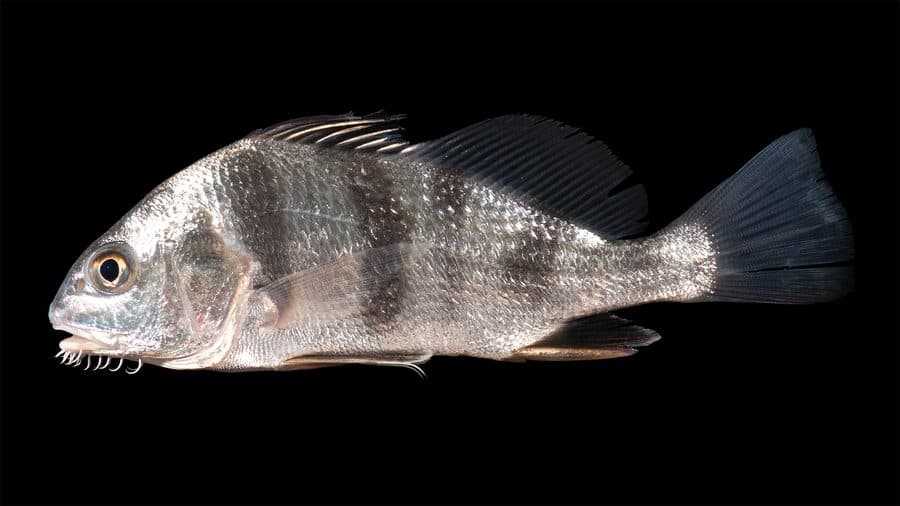
Black Drum
Pogonias cromis
The redfish's whiskered cousin — a crustacean-crushing bottom feeder that reaches 60+ pounds. Puppy drum are excellent eating and beginner-perfect; the giants are a rod-bending spring ritual.
Crab or shrimp on bottom near structure or channel edges — drum find it by feel and smell. The spring spawning run of giants at bridges and passes is big-fish access for everyone.
Quick Catch Plan
ID Characteristics
Use these field marks and context clues to separate black drum from similar fish before logging or keeping one.
- Overall look: The redfish's whiskered cousin — a crustacean-crushing bottom feeder that reaches 60+ pounds. Puppy drum are excellent eating and beginner-perfect; the giants are a rod-bending spring ritual.
- Typical size: 2–10 lb ('puppy drum'); trophy class: 30 lb+ ('big uglies').
- Most likely setting: inshore, pier, bridge, jetty, marsh in Gulf Coast, Atlantic Coast, Southeast, Florida, Northeast.
- Where to confirm it: Purple-tinged tails on shallow oyster flats; croaking you can hear through a hull in spring.
- Compared with Redfish: Black drum have chin barbels and no tail spot; young drum show vertical bars.
- Compared with Sheepshead: Sheepshead bars are crisper on a silver body and they lack barbels.
Gear Recommendations
- Rod
- 7' M (puppies) to 8'+ MH-H (giants/surf)
- Reel
- 3000 (puppies) to 6000–8000 (giants)
- Main line
- 15 lb braid up to 40–50 lb
- Leader
- 20 lb (puppies) to 50–60 lb mono (giants; abrasion)
- Hooks
- 1/0 circle (puppies) to 8/0 circle (crab baits)
- Jigheads
- 1/4 oz for shrimp-tipped jigs
- Terminal tackle
- Fish-finder/Carolina rigs 1–4 oz; pyramid sinkers in surf
- Lure sizes
- n/a
- Lure colors
- n/a
- Baits
- Blue crab (halved/quartered) · Fresh dead shrimp · Clams (mid-Atlantic) · Sand fleas
M combo, Carolina rig, dead shrimp at any bridge or pier — puppy drum are as reliable as fishing gets.
Same rig, buy crab when targeting bigger fish.
Heavy circle-hook rigs with cracked crab at spawning-run channel edges; Delaware Bay clam chumming for 60 lb class fish.
Techniques
- Presentation
- Dead-stick on bottom. Crack crab shells slightly to bleed scent.
- Retrieve
- None; circle hooks + rod holder do the work. Slow-hop jigs for sight-fished puppies.
- Positioning
- Cast to the up-current side of pilings and ledges where scent trails down-current.
- Depth
- 2–8 ft flats (puppies); 10–40 ft channels (giants).
- Structure
- Bridges, channel edges, oyster reefs, marsh drains, surf sloughs.
- Working current
- Enough to carry scent, slow enough to hold bottom — the classic drum window.
Anchor up-current of ledges; chum with cracked crab.
Gulf/Atlantic piers during spring runs — heavy rig off the end, dead shrimp closer in.
Delmarva spring surf: clam baits in the slough at dusk.
Puppy drum on flats eat jigs like redfish do.
Bridges, seawalls, and marsh banks all produce; nothing fancy required.
Timing & Conditions
- Seasons
- Late winter–spring spawn run is the event; puppies bite all year, best fall–spring.
- Time of day
- Night shines for giants; puppies all day.
- Weather
- Drum bite through cold and murk when other species quit.
- Wind
- Bottom-fishing forgiving; find a castable lee.
- Water temp
- Active 50–85°F.
- Tides
- First half of incoming and last of outgoing at structure.
- Moon
- Spring full/new moons intensify the spawning aggregations (they drum audibly).
- Pressure
- Minor; scent feeding endures fronts.
- Seasonal movement
- Estuary residents; mass movements to spawning channels late winter.
Habitat — Where to Find Them
Murky estuaries, bays, and surf from New Jersey to Texas — thrives where visibility is zero.
- Depth range
- 2–40 ft.
- Look for
- Purple-tinged tails on shallow oyster flats; croaking you can hear through a hull in spring.
- Migration
- Short seasonal runs to spawning channels; otherwise homebodies.
Common Mistakes
- Jerking circle hooks away from slow, mouthing bites — let them load
- Fishing giants with light leaders around barnacled pilings
- Keeping big spawners — fish over ~15 lb are wormy eating and vital breeders anyway
- Ignoring dead shrimp because it's boring (drum don't think so)
- Fishing still water with no scent trail
Catch, Handling & Release
- Landing
- Net puppies; big fish need a sling or careful two-person lift (or de-hook in the water).
- Handling
- Giants are old (30–60 yrs) — minimal air time, full body support.
- Release
- Release everything over ~10 lb; revive patiently in current.
- Conservation
- Slot-style rules in several states (e.g., TX 14–30" with one oversize tag rules, LA 16–27") — check locally.
Common Lookalikes
Black drum have chin barbels and no tail spot; young drum show vertical bars.
Sheepshead bars are crisper on a silver body and they lack barbels.
Local Regulations
Size limits, bag limits, seasons, and gear rules change every year and differ by state (and often by individual water). Always verify with the official source before keeping fish.

All state sources for this species
Guide data is editorial and general — conditions, regulations, and fish behavior vary by water. Photo: Wikipedia — Black drum.
